
Shoreham Port Authority
The Challenge
Shoreham Port has operated as a Trust Port for more than 260 years, guided by a simple but unwavering purpose: to improve our port for everyone. At the heart of this purpose is a commitment to ensuring that everyone goes home safe and well every day.
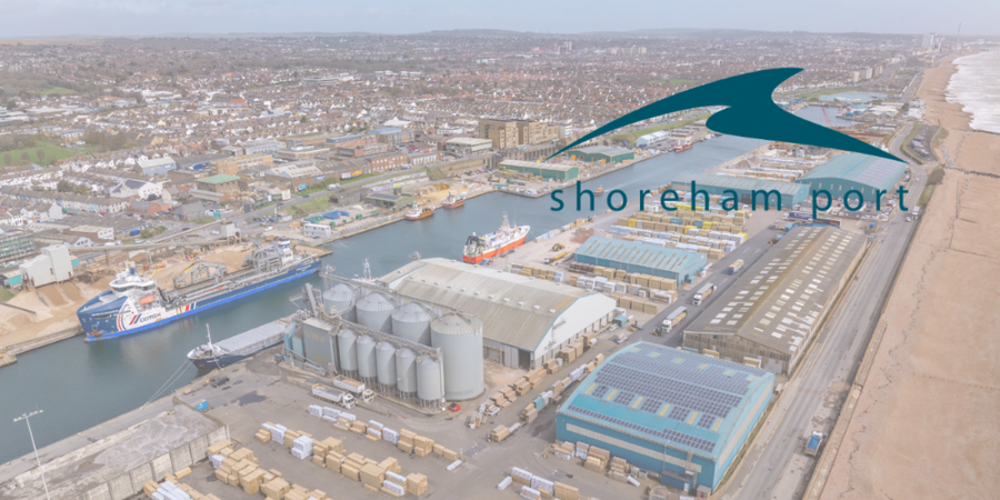
One of the Port’s highest‑risk areas is landside operations. A team of approximately 40 Port Operatives safely discharges around 150 vessels each year and loads imported timber onto more than 12,000 lorries for onward transport. While most timber packs arrive with dunnage already attached, some loads historically required adjustment or additional dunnage, which exposed operatives to working at height on lorry loads.
The risks associated with working at height are well recognised. Falls from height remain the leading cause of work‑related fatalities in the UK and a major contributor to serious injury. Shoreham Port has also experienced first‑hand the life‑changing consequences such incidents can bring, reinforcing the need to eliminate this hazard wherever possible rather than relying solely on controls.
The Innovation
To remove the need for working at height entirely, Shoreham Port designed a dunnage placement tool that allows operatives to position dunnage precisely while standing safely on the ground.
The tool consists of a lightweight pole with a specially angled head that securely holds a length of dunnage at the correct orientation. This enables the operative to place dunnage accurately onto the load without climbing onto the lorry or manually handling the timber above ground level. The design also prevents the dunnage from slipping or falling, further reducing the risk of injury.
Development was highly collaborative. Operational colleagues, as the end users, were closely involved throughout. An initial steel prototype proved too heavy, leading to a second aluminium version that addressed weight concerns. Subsequent in‑house refinements improved ergonomics and usability. After several trials and iterations, a final design was agreed that met both safety and operational requirements.
How It Was Implemented
The tool was introduced following close engagement with port operatives to ensure it was practical for repeated use and did not introduce new risks. Ergonomics were refined through multiple prototype iterations, and the tool’s safe working load was independently assessed to confirm its robustness for port operations.
Implementation was supported by updated lorry‑loading procedures and a team‑wide briefing. This session not only demonstrated how to use the tool safely, but also reinforced why eliminating work at height was so important. Keeping safety relevant and engaging was a key part of ensuring adoption and long‑term success.
Result
The immediate and most significant outcome was the complete elimination of working at height during timber loading. This removed one of the most serious hazards faced by the Operations team and directly addressed the leading cause of fatal workplace injuries.
Operational efficiency has been fully maintained. Dunnage can now be placed quickly and accurately from ground level, without introducing additional manual‑handling risks or slowing the high‑volume loading of more than 12,000 lorries per year.
Since implementation, there have been no accidents, near‑misses or safety observations associated with the revised loading process—clear evidence of the effectiveness of the solution.
Conclusion
The Shoreham Port dunnage placement tool is a strong example of grassroots innovation: a simple, low‑cost solution developed by front‑line teams to solve a real operational risk where no commercial product existed.
The tool demonstrates Shoreham Port’s commitment to a proactive, risk‑based approach to health and safety—eliminating hazards at source while maintaining productivity. It has reduced the Port’s risk profile, improved safety outcomes for colleagues, and reinforced the core commitment to ensuring everyone goes home safe and well every day.
- Date
- 25/08/2026