
Warrenpoint harbour authority
The Challenge
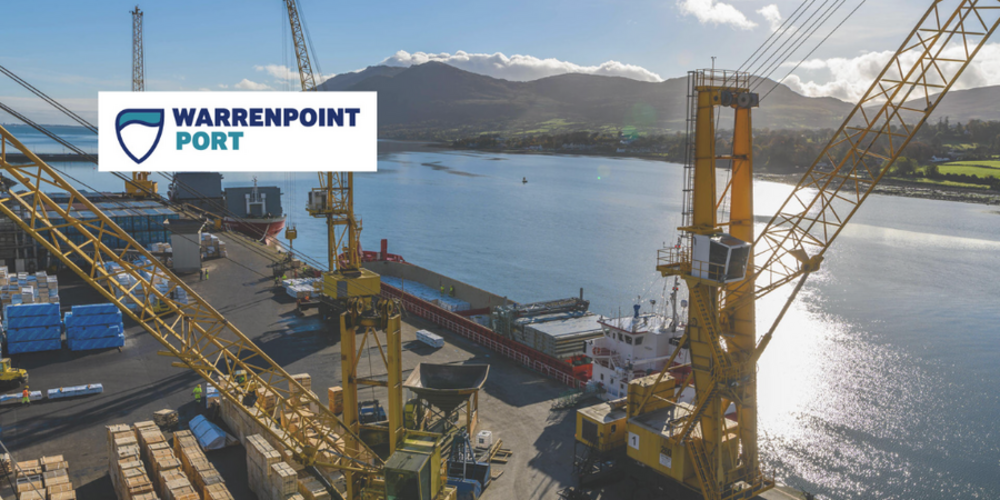
Cargo-handling operations beneath mobile harbour cranes are among the highest-risk activities in port operations. Stevedores work within confined ship holds and quayside environments while heavy loads move overhead, often with limited visibility for crane operators and supervisors.
Historically, incident investigation and operational assurance relied heavily on witness statements, personal recollection and limited fixed CCTV coverage. When injuries occurred, understanding exactly what happened, where visibility was compromised, or whether procedures were followed was difficult and time-consuming. This lack of direct operational insight reduced opportunities for learning, improvement and prevention.
Warrenpoint Port recognised that improving safety in crane operations required greater real-time visibility of cargo handling activities — not just for post-incident review, but to enable proactive monitoring and continuous improvement across day-to-day operations.
The Innovation
To address this challenge, Warrenpoint Port installed a five-camera system on its mobile harbour cranes, providing full 360-degree visual coverage during crane operations.
Five cameras were selected as the optimal configuration to ensure comprehensive coverage above deck, within the vessel hold and across the crane working envelope. This configuration allows supervisors and operational teams to observe lifting operations from all critical angles, eliminating blind spots and improving situational awareness.
The system enables:
- Remote, real-time monitoring of cargo operations inside ship holds
- Objective review of incidents and near-misses
- Improved understanding of work practices, visibility constraints and behavioural factors
Footage is securely stored on the port’s server, creating a reliable visual record that supports learning, accountability and safety assurance without reliance on memory or interpretation alone.
How It Was Implemented
Implementation followed a collaborative and evidence-based approach. Warrenpoint Port worked closely with crane operators and operational staff to define requirements and ensure the system supported real working conditions.
A series of trials using GoPro cameras were conducted to determine the optimal placement of each camera. These trials validated that five cameras were necessary to achieve true 360° coverage while the crane was in operation.
To ensure uninterrupted signal transmission, booster aerials were installed both on the crane itself and on the highest point of an adjacent silo. This configuration guarantees constant signal strength regardless of crane position or vessel location.
Once installed, the system was integrated into port IT infrastructure, with captured footage stored centrally on the port server and made available for authorised safety and operational review.
Result
The system has already delivered measurable benefits. Warrenpoint Port has successfully reviewed a serious incident involving a stevedore injury during steel discharge operations, using recorded footage to establish a clear, factual understanding of the event.
Beyond incident review, the port now routinely monitors crane operations within ship holds remotely. This has enhanced oversight, strengthened safety assurance and created new opportunities for proactive observation and learning.
The value of the system has been clearly demonstrated, and Warrenpoint Port now intends to roll out the same camera solution across its remaining mobile harbour cranes — embedding consistent safety visibility across all crane operations.
Conclusion
The crane-mounted camera system represents a practical, technology-enabled safety innovation that addresses a long-standing challenge in port operations: limited visibility during high-risk lifting activities.
By providing full 360° operational insight, the system improves incident investigation, supports continuous improvement and enhances real-time oversight without disrupting operations. It shifts safety management from reactive analysis to proactive understanding.
Warrenpoint Port’s approach demonstrates how relatively simple technology, implemented thoughtfully and collaboratively, can deliver significant safety benefits. The solution strengthens accountability, improves learning outcomes and reinforces a safety culture grounded in visibility, transparency and evidence.
- Date
- 25/08/2026