
Rombit Europe
The Challenge
In high‑risk industrial environments, safety monitoring relies on multiple specialised tools such as gas detectors, environmental sensors and personal protective devices. While each technology serves an important purpose, they typically operate on separate systems and platforms. This creates fragmented data silos and limits visibility of overall risk.
Safety managers are often forced to monitor multiple dashboards, reconcile information manually and respond with incomplete situational awareness. As a result, hazards may be detected too late, response times can increase and decision‑making becomes more complex than necessary. Instead of a single, reliable source of truth, teams face dispersed data, delayed insights and inefficiencies precisely when rapid action is most critical.
Although complementary safety technologies exist, their combined value is significantly reduced without proper integration. The challenge is not a lack of sensors or devices, but the absence of a unified, connected view of risk.
The Innovation
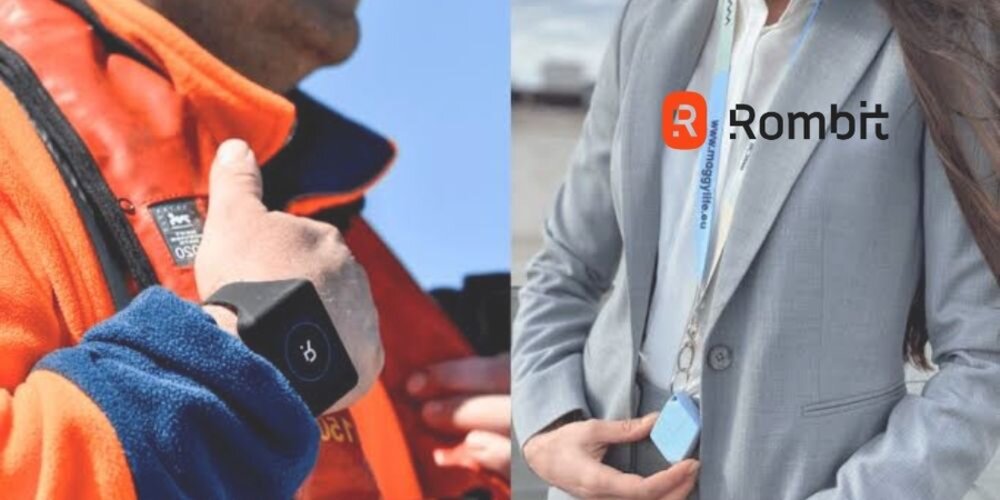
Rombit enhances industrial safety by unifying wearable technology, gas detection and lone‑worker protection into one integrated platform. By combining gas sensors with Rombit’s existing connected‑worker solutions, the system consolidates safety data and provides a comprehensive real‑time overview of personnel and environmental risk.
All monitoring systems converge into a single, centralised hub. This allows safety teams to manage lone‑worker alarms, gas exposure events and emergency alerts in one place rather than across disconnected tools. Hardware management is simplified, oversight is improved and critical incidents can be addressed more quickly.
By delivering a unified safety ecosystem instead of isolated devices, Rombit transforms how safety data is collected, interpreted and acted upon in high‑risk environments.
How It Was Implemented
Rombit’s connected‑worker solutions have been implemented across industrial sites to enhance personal safety and risk awareness. Deployments include use cases involving lone‑worker monitoring, immediate incident alerts and integrated gas‑detection systems.
The solution has been rolled out in multiple operational environments across Latin America and Europe, with proven applications in industries such as manufacturing, mining and offshore operations. These real‑world implementations demonstrate how different safety layers can be connected seamlessly without disrupting existing workflows.
Result
Adoption feedback has been strongly positive. Workers prefer using Rombit’s wearable safety devices rather than operating without personal protective technology. The integrated approach improves confidence and comfort while ensuring continuous monitoring.
For organisations, consolidation of safety systems has delivered clearer visibility of risk and faster awareness of incidents. The platform supports timely intervention across industrial environments, reducing blind spots and enabling better‑informed responses.
Conclusion
By consolidating gas detection, lone‑worker monitoring and safety alerts into a single platform, Rombit provides real‑time visibility of risk across high‑hazard environments. This unified view improves response times, reduces operational complexity and supports consistent, proactive safety decisions.
Rombit demonstrates how connected technology can move industrial safety beyond isolated tools toward an integrated, data‑driven approach—protecting workers while enabling smarter, more resilient operations.
- Date
- 25/08/2026