
CM Labs Simulations INC
The Challenge
Ports worldwide face a growing safety‑performance paradox. Cargo volumes continue to rise, requiring faster crane operations, while inexperienced operators increase the risk of incidents, delays and equipment damage. At Hanseatic Global Terminals’ San Vicente Terminal Internationale (SVTI) in Chile, this challenge was intensified by a workforce made up of nearly 50% temporary labour and a continuous inflow of new operators with limited experience on Mobile Harbour Cranes (MHC) and Ship‑To‑Shore (STS) cranes.
Inconsistent training approaches, equipment reliability issues and the need to quickly upskill operators placed pressure on productivity and safety. SVTI required a solution that could accelerate competency development, reduce errors, support progression from Tier‑2 to Tier‑1 roles, and ensure training outcomes were measurable, standardised and aligned with operational demand.
The Innovation
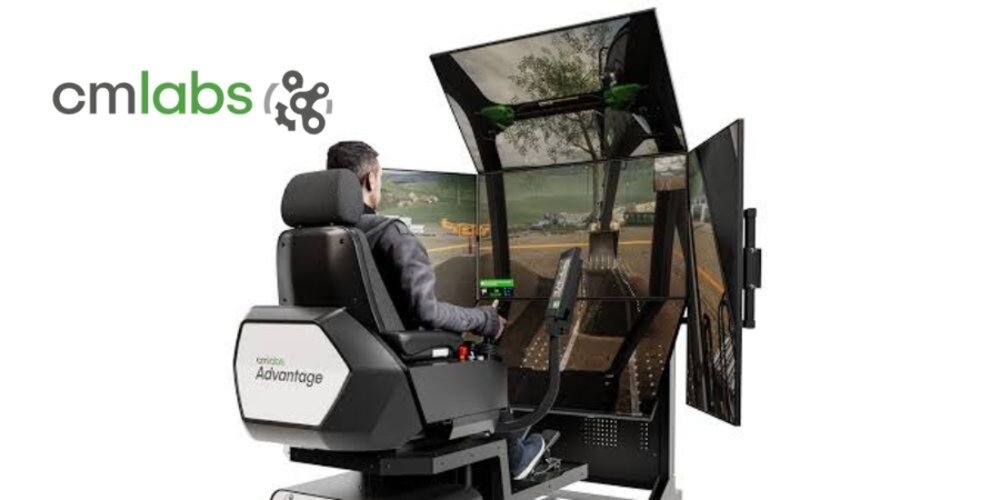
SVTI implemented CM Labs’ Intellia Training System, a comprehensive, data‑driven simulation training management platform enabling high‑fidelity, zero‑risk crane operator development. Intellia combines immersive crane simulators with structured curricula and advanced analytics to transform operator training into a consistent, transparent and measurable process.
High‑fidelity MHC and STS crane simulators replicate real equipment behaviour, allowing operators to practice complex manoeuvres and high‑risk scenarios safely. Intellia’s training management layer tracks individual learning curves, detects errors, benchmarks performance and supports tailored training pathways. Together, these elements ensure skills progression is based on objective data rather than time served or exposure to live operations.
How It Was Implemented
SVTI worked closely with CM Labs to deploy Intellia as the foundation of a multi‑phase training programme. Operator profiles, competency benchmarks and KPIs were defined, followed by baseline assessments. Simulator sessions were integrated with vessel schedules and shift patterns, ensuring minimal operational disruption.
Training focused on new operators and mid‑tier personnel transitioning to more advanced roles. Intellia analytics enabled instructors to identify performance gaps, manage regressions and confirm readiness before operators progressed to live equipment, aligning training directly with productivity and safety expectations.
What Was the Result
The programme delivered clear, measurable improvements. MHC operators achieved a 5.13% productivity increase and an 11% improvement in zero‑error quality. STS operators recorded productivity gains of 14.5% and a 14% improvement in first‑operation quality. Performance variability across operators was reduced, enabling safe promotion of Tier‑2 operators to Tier‑1 roles.
Business impact followed, with container volumes increasing 43% year‑on‑year and significant growth in both import and export traffic.
Conclusion
By adopting the Intellia Training System, SVTI established a scalable, data‑driven approach to operator development where safety, performance and business outcomes are tightly linked. The programme strengthened workforce readiness during rapid growth and demonstrated how simulation‑based training can deliver safer, more reliable port operations across the transport and logistics sector.
- Date
- 25/08/2026