
KALP GmbH Automatic Lashing Platform
The Challenge
Even in the most modern container terminals, twistlocks and stackers are still inserted into and removed from container corner castings manually. This persists even though manual lashing has long been recognised as one of the last majors, unresolved occupational safety risks in container handling.
Stevedores carrying out these tasks are required to work in the travel area of horizontal transport beneath gantry cranes and directly under suspended loads. These conditions repeatedly lead to serious injuries and, in some cases, fatalities. The combination of moving equipment, restricted visibility and heavy components creates an environment where the margin for error is extremely small.
Over the years, numerous technological approaches have attempted to remove personnel from this hazardous zone. However, most solutions have achieved only partial automation or have proven impractical for real‑world terminal operations. As a result, manual lashing has remained a critical safety exposure in container terminals worldwide.
The Innovation
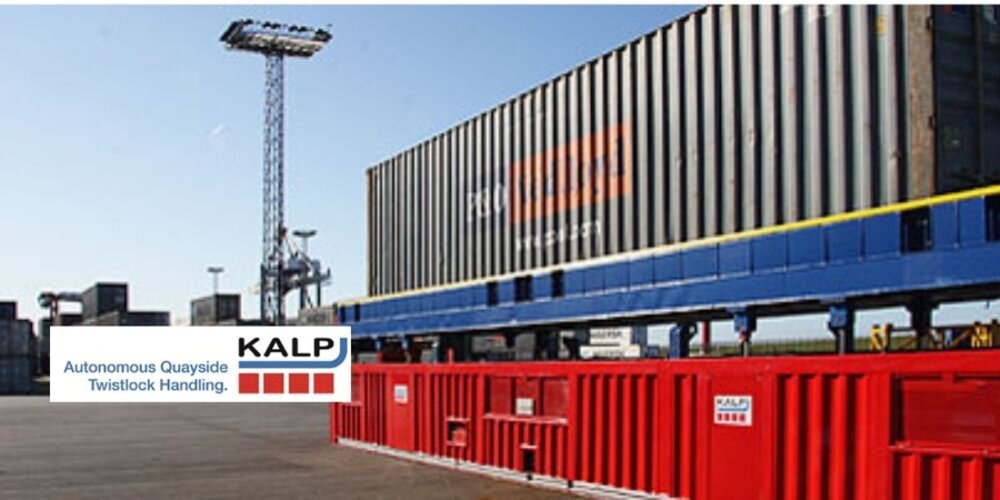
The Automatic Lashing Platform (ALP) is the only system currently available that can fully automate the insertion and removal of twistlocks and stackers without requiring personnel to work near or beneath suspended loads. By eliminating manual intervention entirely, the ALP directly addresses one of the most dangerous tasks in container handling.
The ALP operates independently of any external power supply. An internal hydraulic system uses the weight of the container and crane spreader to power the lashing and delashing process. Integrated magazines can store over 1,000 twistlocks or up to 2,000 stackers, depending on configuration—equivalent to the lashing requirements of one bay on an ultra‑large container vessel.
The system can be monitored and controlled remotely, either through integration with the terminal’s existing network and software or via a handheld device. This allows operators to manage lashing operations from a safe distance while maintaining full operational control.
How It Was Implemented
The ALP was integrated into operational environments at German container terminals in 2021 and again in 2024, where it was used during live vessel operations. The deployment was carried out in close cooperation with terminal management.
To ensure smooth and error‑free operation, KALP GmbH provided targeted training for relevant terminal personnel, including gantry crane operators and horizontal transport drivers. This ensured that the system could be safely adopted without disrupting established workflows.
What Was the Result
During ALP operations, personnel were no longer required to work beneath gantry cranes or suspended loads. This eliminated a major safety exposure and significantly reduced the risk of serious injury.
In addition to the safety improvements, terminals observed increased productivity during operations. Acceptance of the system by terminal operators and operational staff was high, with crane drivers and transport operators recognising both the safety and efficiency benefits of the automated process.
Conclusion
To fully automate modern container terminals while meeting the highest safety standards, personnel must be removed from hazardous areas beneath gantry cranes. The Automatic Lashing Platform has demonstrated that this is not only possible but operationally viable.
By fully automating lashing and delashing, the ALP delivers a step change in terminal safety, eliminates a long‑standing high‑risk task, and supports the future development of truly automated, safe container terminals.
- Date
- 25/08/2026