
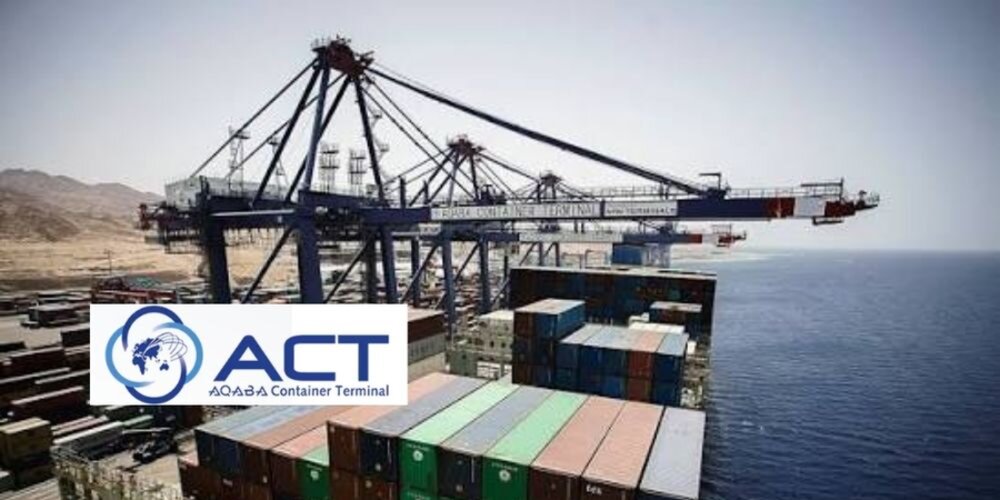
AQABA Container Terminal
The Challenge
Personal Protective Equipment is an important layers of protection in container terminal operations. Yet across APM Terminals’ global network, PPE standards varied significantly. Terminals often purchased equipment locally based on price or availability, resulting in inconsistent levels of protection, comfort and durability. Workers performing the same tasks in different regions were not receiving the same quality of protection, and in some cases, PPE did not fully align with the hazards involved. This inconsistency affected compliance with international standards and created uncertainty among both employees and contractors. A unified global reference was needed to ensure every person—regardless of country or supplier—had access to high quality, task appropriate PPE.
The Innovation
The PPE Standard Catalogue introduces a single, global reference for all Personal Protective Equipment used within APM Terminals. It establishes a clear baseline for quality and performance, fully aligned with EN, ANSI and ISO requirements. The catalogue includes technical specifications, selection criteria and visual guidance for all PPE categories, from head and eye protection to gloves, respiratory equipment and fall arrest systems. It also defines specialised requirements for high risk activities such as lashing, ensuring workers have access to the exact level of protection needed for their role. By providing one authoritative source, the catalogue brings consistency, clarity and confidence to PPE selection across the entire organisation.
How It Was Implemented
The global HSSE team developed the catalogue through collaboration with multiple terminals, collecting technical data and operational feedback to understand sourcing gaps and variations. These insights were consolidated into a single document aligned with international standards and APM Terminals’ safety policies. After review and approval from HSSE leadership, the catalogue was released digitally to all terminals in 2025, supported by awareness sessions and visual training materials. Procurement systems are now being updated to ensure only compliant PPE can be purchased globally, embedding the new standard into everyday operational practice.
What Was the Result
The introduction of the PPE Standard Catalogue brings higher protection quality, greater consistency and improved worker comfort throughout the network. Terminals benefit from streamlined procurement, reduced supplier variation and faster approval processes. Compliance results are expected to rise, and employees report increased confidence knowing their equipment meets a global benchmark. The catalogue has already received positive recognition within APM Terminals as a model for standardisation and risk reduction.
Conclusion
The PPE Standard Catalogue is a simple but powerful innovation that transforms how APM Terminals manages personal protection. By combining technical accuracy with clear visual guidance, it ensures every employee and contractor is protected to the same international standard. The initiative supports ISO 45001 requirements, strengthens safety culture and provides a scalable framework that can benefit the wider transport and logistics industry.
AutolashTM Corner Casting and Ship to Shore Spreader
The Challenge
Securing containers on vessels is essential for safe global shipping. Today this relies on twistlocks, which must be manually locked and unlocked by dockworkers on the quayside and on deck. As vessels grow larger and shipping lines demand faster port operations, twistlock handling has become an increasing bottleneck—both in terms of productivity and, critically, safety.
Twistlock handlers work directly beneath ship-to-shore cranes, exposed to moving equipment, falling twistlocks and difficult access points on vessel decks. The risks include crush injuries, falls and serious impact incidents. Despite many attempts to improve the process, twistlock handling has remained one of the most hazardous and inefficient tasks in container terminals.
The AutoLashTM concept removes the need for twistlocks entirely, eliminating the most dangerous aspect of container lashing and enabling safer, faster, more predictable vessel operations.
The Innovation
At the core of the AutoLash solution is a newly designed corner casting installed on the top of a container. The AutoLash Corner Casting (ACC) integrates the full lashing function directly into the container itself. A modified ship-to-shore spreader, equipped with an actuator, controls three modes within the ACC: a “pin” mode for securing containers on deck, a “guide” mode for below-deck stowage, and a “hidden” mode that retracts the pin, allowing the container to be handled like a standard ISO unit.
The casting is engineered for durability, experiencing significantly less wear than traditional twistlocks. It removes the need for manual lashing while remaining fully interoperable—one crane cycle can handle both ACC equipped and standard containers. No other terminal equipment requires modification, supporting a smooth, gradual transition for global fleets.
By eliminating twistlocks, terminals reduce accident exposure, enable higher berth productivity and support full automation.
How It Was Implemented
AutoLash collaborated closely with Dutch spreader manufacturer Stinis to develop both the corner casting and the modified spreader. The design was informed by industry professionals with extensive operational experience and deep knowledge of twistlock related risks. A working prototype has been built, demonstrating full functionality and compatibility with existing port operations.
What Was the Result
Feedback from shipping lines, terminal operators, insurance representatives and classification societies confirms the advantages: reduced lost time incidents, faster vessel turnaround, lower fuel use, greater reliability, reduced maintenance and the potential for full terminal automation. AutoLash is now preparing to run pilot projects with industry partners.
Conclusion
By embedding lashing capability directly into the container, AutoLash removes the need for manual twistlock handling and creates a safer, more efficient quayside environment. The solution reduces equipment wear, improves operational speed and delivers strong return on investment for both terminals and shipping lines. AutoLash represents a major step toward safer, more automated and more sustainable port operations.
- Date
- 20/08/2026