
Individual Innovator, Edmund Greenwood
The Challenge
In 2005, following the terrorist attack on the World Trade Centre, European Ministers of Transport convened a conference titled “Container Transport Across Modes” to address container security. A central concern was the risk of containers being used to transport concealed threats.
In the conference’s Overview and Analysis, Section 2 (Securing Container Integrity), it was noted that many customs seals only indicate whether the seal itself has been tampered with—not whether the container’s integrity has been compromised.
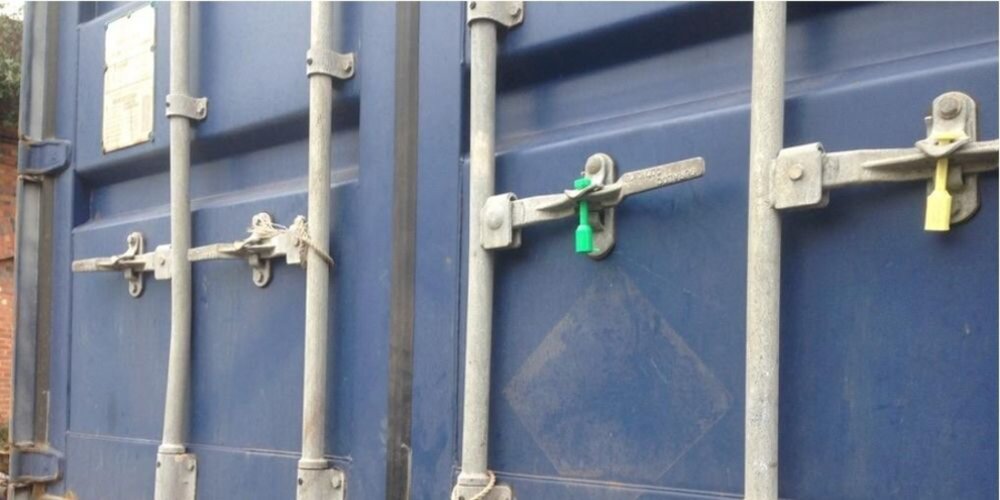
Two decades later, this vulnerability still exists. The customs seal fastening point remains positioned in a way that does not physically block access to the cargo space. While container door designs and manufacturing processes have improved, they have failed to deliver a meaningful security solution. Even with technologies such as the SecuraCam fitted to door hardware, covert theft and smuggling continue.
Criminal activity exploits a critical weakness: customs seals can be bypassed without being broken, then left intact as a false indicator of security. This allows the seal to act as a “red herring,” masking unlawful access and shifting responsibility away from the point of intrusion.
The Innovation
The innovation introduces a new Customs Seal Fastening Point positioned across both container doors, which must be broken to gain access to the cargo space. This fundamentally changes the role of the customs seal—from a symbolic indicator to a true physical barrier.
The device replaces the commonly tampered right‑hand door overlap plate (TIR plate), making internal TIR plates redundant and eliminating door‑hardware fastener tampering. Designed as a welded component of the container structure, it restores the permanence and integrity found in first‑generation container manufacturing—essential for genuine security.
If adopted, the fastening point becomes a definitive focal point for customs inspections. Any tampering would be immediately visible, fully meeting TIR regulatory requirements. The device is uniquely identifiable, displaying the container prefix and fleet number, enabling one‑shot, close‑up photographic verification after loading. Seal number, type and colour, along with pre‑trip condition, can be recorded and shared digitally across the global supply chain.
When combined with bar‑coded customs seals, the system supports automated gate scanning and integrated port operations. By securing both doors simultaneously, it provides the ideal foundation for future e‑seal adoption.
How It Was Implemented
Commonly referred to as a Customs Sealing TIR Plate, the device incorporates proven anti‑racking engineering. Containers experience opposing vertical door movement during transport, and the design accommodates this motion while preventing shear forces from acting on the customs seal.
Positioned in the lower quarter of the doors, the fastening point allows easy sealing when containers are on trailers and enables efficient inspection at checkpoints. Both fastening points are welded into the container structure, aligning with preferred attachment methods under the TIR Convention.
While not yet implemented in production containers, the design directly addresses known vulnerabilities by protecting the left‑hand door, eliminating fastener tampering and preventing the bending and re‑alignment of overlay plates used to conceal criminal acts.
Conclusion
Existing solutions, including SecuraCam and RFID‑based e‑seals, rely heavily on door hardware fasteners that can be removed quickly and covertly. Without a welded, permanent fastening point that must be broken to gain entry, such technologies cannot deliver full security assurance.
This innovation restores the principle that tampering must be unavoidable and visible. As a welded, painted component of the container door, it offers permanence, verifiability and clarity of responsibility. Photographic evidence and digital verification enable transparency throughout the supply chain.
Adoption of this Customs Seal Fastening Point could represent a genuine step change in global container security—ensuring criminal activity is detected at its source and accountability is clear.
This innovation is protected by UK and Chinese patents.
For further information, please contact: edmund.greenwood@icloud.com
- Date
- 25/08/2026