
TT Talk - Preventing bridge strikes in road transport
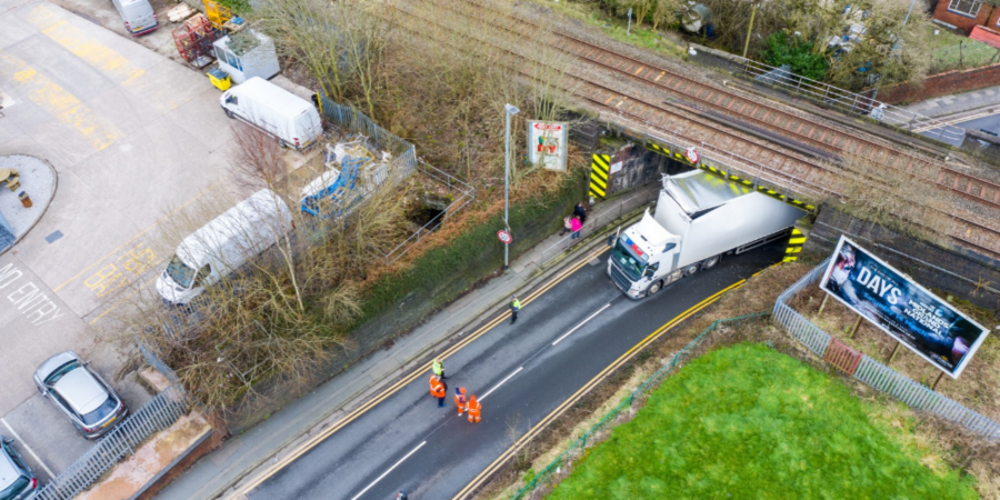
Bridge strikes are rarely just driver error
Bridge strikes involving commercial vehicles are often attributed to driver error. Claims experience suggests, however, that the underlying causes are usually more complex. In many cases, the incident reflects a breakdown in journey planning, load-height verification, route management or operational control rather than a simple driving mistake. Analysis of bridge-strike claims found that the dominant causation theme was less about bridges as unexpected hazards and more about failures in the planning stage to match vehicle dimensions with the route environment.
Understanding this distinction is important for transport operators and risk managers. If bridge strikes are viewed solely as isolated driving incidents, opportunities to address broader organisational weaknesses may be missed. Effective prevention requires a route-assurance process that begins before loading and continues throughout the journey.
The consequences of a strike can extend beyond damage to the cargo itself. Incidents may result in bridge damage, traffic disruption, recovery expenses, project delays and significant third-party costs, not least detailed engineering assessments to consider potential structural damage. Even minor clearance errors can produce substantial financial consequences when high-value project cargo is involved. There is an additional and less quantifiable head of cost, that of reputational damage. In an age of social media, where everybody has ready access to a camera and the internet, it can be damaging to have an image of your vehicle and brand associated with such an incident.
Why bridge strikes occur
The claims reviewed highlight two particularly common factors: route planning failures and incorrect clearance assessments. Several incidents involved route diversions caused by roadworks, local events or other disruptions. In these cases, a route initially considered safe became unsuitable once the planned journey changed. Other claims involved route plans that directed vehicles beneath structures offering insufficient clearance for the loaded height.
These incidents demonstrate that route planning is not a one-time exercise. Any significant route alteration can introduce new hazards and should trigger further clearance checks. A diversion effectively creates a new transport operation and requires the same level of scrutiny as the original journey plan.
The importance of accurate load-height measurement
Reliable height information remains the foundation of bridge-strike prevention. The critical measurement is the overall loaded height of the vehicle, including cargo, securing equipment, dunnage, cradles and protective materials. Several claims involved miscalculations of cargo height or failures to compare the loaded dimensions against available bridge clearances. Other incidents cited inadequate signage or uncertainty regarding bridge-height information.
In practice, operators should obtain and record the actual loaded height after loading and securing have been completed. That measurement should then be compared against the lowest verified clearance on the authorised route. Where uncertainty exists regarding either the vehicle height or available clearance, the movement should be delayed until the information has been verified.
A reasonable safety margin is equally important. Road conditions, suspension movement, vehicle loading characteristics and measurement tolerances can reduce practical clearance. A route that provides only minimal clearance may still present an unacceptable level of risk.
Abnormal loads face greater exposure
The claims analysis indicates that heavy and abnormal loads are particularly vulnerable to bridge-strike incidents. Wind-energy components, industrial machinery, nacelles, towers, blades and other oversized cargo featured prominently throughout the dataset. These cargoes often operate close to infrastructure limits and may require specialised route planning, permits or escort arrangements.
heavy and abnormal loads are particularly vulnerable to bridge-strike incidents. Wind-energy components, industrial machinery, nacelles, towers, blades and other oversized cargo featured prominently throughout the dataset.
The consequences of a strike can extend beyond damage to the cargo itself. Incidents may result in bridge damage, traffic disruption, recovery expenses, project delays and significant third-party costs. Even minor clearance errors can produce substantial financial consequences when high-value project cargo is involved.
For this reason, abnormal-load transport requires rigorous planning. Route surveys, permit reviews, dimensional verification and clearly allocated responsibilities between all parties should form part of the transport process before departure.
Managing diversions and unexpected events
Typically, the driver naturally is the last line of defence in mitigating this risk. It is they who know the height and configuration of the variable (vehicle and cargo) and are therefore empowered to mitigate to risks. Every route will be different and dynamic. Unplanned route changes featured repeatedly within the claims reviewed. Conventional navigation tools can assist with general route management but may not contain reliable information regarding vehicle dimensions, abnormal-load restrictions or temporary clearance limitations. Reliance on standard navigation systems alone can therefore create unnecessary exposure.
the driver naturally is the last line of defence in mitigating this risk.
A robust diversion procedure can significantly reduce risk. If drivers are unable to follow the authorised route, the movement should be paused until a competent operational contact has assessed the alternative route. This approach prevents drivers from making clearance decisions under time pressure or in unfamiliar locations.
Unexpected events can also create bridge-strike exposure. One claim involved a tyre blowout, with damage occurring while the vehicle attempted to pull over. Although the immediate trigger differed from other incidents, the case reinforced the importance of maintaining awareness of surrounding infrastructure during emergency manoeuvres involving high or abnormal loads.
The role of subcontractors and documentation
Claims involving subcontracted carriers demonstrate the importance of clearly allocating operational responsibilities. Even where a driver or motor carrier is directly responsible for the incident, liability and recovery prospects often depend on documented instructions, contractual arrangements and evidence of carrier oversight. The claims reviewed frequently referred to recovery actions against subcontracted motor carriers and the importance of preserving relevant evidence.
Documentation plays a critical role in both prevention and claims handling. Route plans, permits, photographs, telematics, survey reports, transport documents and video footage may all be required to establish what occurred and determine liability. The review found that incomplete or delayed documentation frequently complicated the handling process.
he review found that incomplete or delayed documentation frequently complicated the handling process.
Conclusion
The claims examined suggest that bridge strikes are largely preventable events. The most consistent causal theme was not the bridge itself but a failure to align the loaded vehicle profile with the route environment. Route planning deficiencies, inaccurate height measurements, uncontrolled diversions and inadequate operational controls appeared repeatedly throughout the dataset.
For transport operators, the principal lesson is clear. Effective bridge-strike prevention depends upon accurate loaded-height verification, route validation, disciplined diversion management and strong subcontractor oversight. When uncertainty exists regarding either the vehicle dimensions or route clearance, movement should not continue until the risk has been properly assessed. In most cases, bridge strikes should be viewed as route-assurance failures rather than unavoidable transport accidents.
- Author
- Josh Finch
- Date
- 03/11/2026