
Electric pilot boats help ports to decarbonise
The ports sector faces mounting pressure to reduce its carbon footprint. While much attention has focused on ships, smaller craft such as port work boats also contribute significantly to emissions. Decarbonising these operations is a vital step towards achieving broader environmental goals.
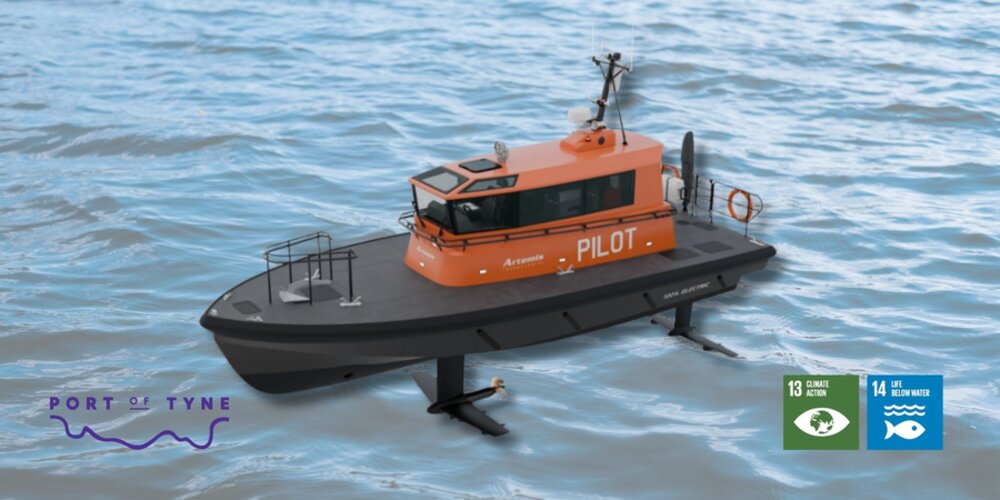
Pilotage services are essential for safe navigation in and out of ports yet have traditionally relied on diesel-powered craft. In a significant shift towards cleaner and greener operations, the Port of Tyne is due to take delivery of the UK’s first fully electric foiling pilot boat in 2026. The investment positions the Port at the forefront of maritime decarbonisation and innovation, and reinforces its commitment to sustainability, operational efficiency and safety. It also aligns with the UK Government’s Maritime 2050 strategy.
The Artemis EF-12 Pilot is being built in Belfast in Northern Ireland by Artemis Technologies. It combines hydrofoil design with electric propulsion, reducing drag and dramatically improving energy efficiency. This will deliver zero operational greenhouse gas emissions, supporting the UK’s net-zero ambitions; enhance safety and ride comfort, thanks to improved stability and reduced motion; and reduce noise and vibration, creating better working conditions for crews. The boat’s advanced electronic control systems could also increase its exposure to cyber threats, so it is important to implement strong cyber security measures. Crews will need to be trained and drilled on what to most of them will be new operational and emergency response procedures.
As Matt Beeton, chief executive officer at Port of Tyne, explains, ‘This investment is a clear demonstration of our commitment to sustainability and innovation. By adopting electric foiling technology, we are not only reducing emissions but also setting a new standard for pilotage operations across the UK.’
Environmental and operational benefits
The Port of Tyne’s investment sends a strong signal to the industry: sustainability is not optional – it is a strategic imperative. By embracing electric foiling technology, the port is setting a precedent that others are likely to follow. Beyond environmental gains, the new pilot boat offers tangible operational advantages. These include reduced fuel costs, as electric propulsion significantly lowers operating expenses, and improved crew welfare, as lower noise and vibration enhance comfort and reduce fatigue. Investing in clean technology also future-proofs ports, positioning them to meet evolving regulatory requirements and customer expectations. These benefits underscore why early adopters like Port of Tyne are likely to gain a competitive edge. The EF-12 Pilot is expected to enter service during 2026, marking a milestone for UK ports. Its deployment will provide valuable insights into the performance and scalability of electric foiling technology in real-world conditions.
This is more than an investment in a vessel – it is an investment in the future of maritime operations. We are proud to lead the way in driving positive change for our industry and our environment.
Insurance and loss prevention
For TT Club Members and stakeholders, the introduction of electric foiling craft raises several insurance and loss prevention considerations. For hull and machinery cover, it is important to ensure that policies reflect the unique characteristics of the electric propulsion systems. Battery safety is particularly crucial, as lithium-ion batteries require robust fire prevention and thermal management systems. Loss prevention strategies should focus on regular technical inspections, comprehensive risk assessments before use and collaboration with manufacturers for ongoing support and updates. Conclusion The Port of Tyne’s partnership with Artemis Technologies represents a defining moment for the UK ports sector. By embracing innovation and sustainability, the Port is charting a course towards a cleaner, safer and more efficient future. For the ports sector worldwide, it is a call to action: engage with emerging technologies, assess the risks and seize the opportunities they present.
As Matt Beeton concludes: This is more than an investment in a vessel – it is an investment in the future of maritime operations. We are proud to lead the way in driving positive change for our industry and our environment.
Find this article and more in our latest Port Authority Bulletin here
- Author
- Oscar Egerström
- Date
- 26/08/2026
25/02/2026
Raising safety standards across the port estate
A key role of port authorities is to drive safety across their ports for the benefit of both port users and workers. Dublin Port’s SafePort initiative is a great example of programme which has transformed safety culture across Ireland’s busiest ports.