
TT Talk - Container doors: maintaining the first line of defence
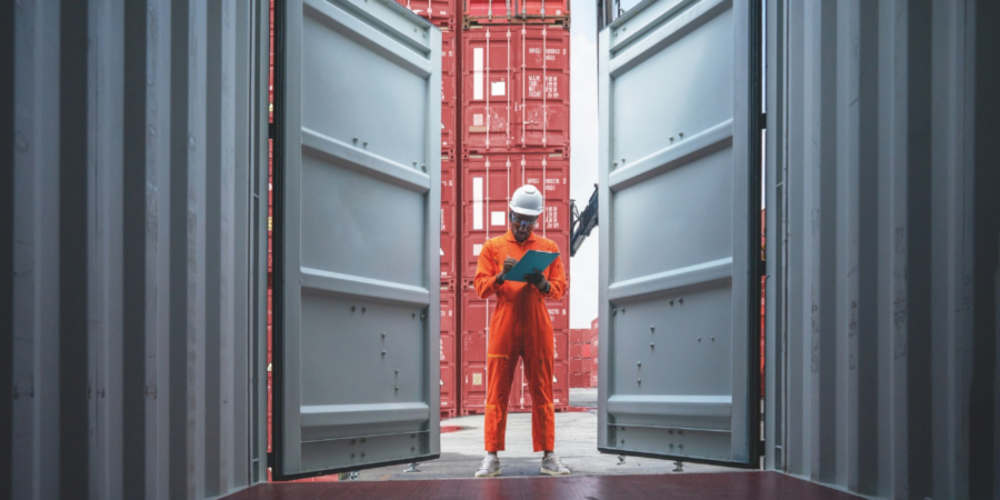
Container doors are opened and closed countless times across the global supply chain. The task is so routine that it can easily be regarded as low risk. However, the doors form a critical component of the container’s structure and provide the final barrier between the cargo and the people responsible for handling it. When doors, hinges or locking gear are poorly maintained, a simple operational task can quickly result in serious injury, cargo damage and disruption.
Previous TT Club guidance has highlighted how container doors are exposed to rain, condensation and salt-laden marine environments. Over time, these conditions can cause hinges and welds to corrode, while impacts sustained during transport and handling may weaken or distort the door assembly. Critically, deterioration is not always obvious. Repainting can conceal corrosion or metal fatigue, giving the impression that the equipment is in a serviceable condition when the underlying structure has already been compromised.
A door is a safety-critical component
A freight container may appear to be a simple steel box, but its doors comprise several interacting components. Hinges, hinge pins, locking rods, cams, keepers, handles, retainers, seals and the surrounding frame must all remain correctly aligned and operational. Damage or deterioration affecting any one of these components can make the doors difficult or dangerous to operate.
Poor alignment may cause locking gear to bind. Corroded hinges may restrict movement or fail. Damaged handle retainers can allow locking handles to move unexpectedly, while distorted door frames can place abnormal loads on hinges and locking rods. Defective seals can also allow water ingress, potentially resulting in wet damage, contamination, corrosion or mould affecting the cargo.
Maintenance should therefore extend beyond applying lubricant or repainting visible surfaces. Inspection must consider whether the complete assembly remains structurally sound, correctly aligned and capable of being operated without excessive force.
When resistance signals a problem
A container door that is difficult to open should never be dismissed as merely inconvenient. TT Club has previously identified several reasons why doors may become stuck, including hinge-pin misalignment, corrosion, a racked container frame, a twisted chassis and cargo pressing against the doors. Each condition requires a different response, but all should prompt the operator to stop and assess the risk.
Opening a door requires that the container is not racked which will impact the ability to physically open the doors. Opening the doors should form two distinct operations, firstly releasing the locking bars and then opening the right-hand door and then the left-hand door so that they swing back against the side of the container. The temptation to use a crowbar, forklift or other mechanical assistance to achieve either of both operations can be considerable, particularly where operational schedules are under pressure. However, applying additional force may release stored energy suddenly, cause components to fail or allow a pressurised door to swing open without control. It may also mask the underlying defect rather than resolve it.
If normal opening techniques are unsuccessful, the operation should be stopped. The container should be placed in a safe location, the potential causes considered and competent assistance obtained. A difficult door is often a warning that something is wrong.
Remember the cargo behind the doors
Door condition is only part of the risk. Cargo may have shifted during road, rail or sea transport because of inadequate packing, insufficient securing, heavy weather, braking forces or impacts during handling. The shifted cargo can exert significant pressure against the doors. This emphasises the need for operators to treat every closed container as presenting a potential hidden hazard.
Before opening, workers should examine the container for visible distortion, damaged components, impact marks or signs that the load has moved and “ring” the door panels to confirm that the cargo is not resting against them. They should remain outside the door swing path and avoid standing directly in front of the doors. Where cargo pressure is suspected, a purpose-designed restraint or a suitable securing strap placed around the closed-door locking bars can permit controlled, partial opening. Improvised arrangements should not be used without an appropriate risk assessment.
Building maintenance into operations
Under the International Convention for Safe Containers, container owners and operators are required to maintain containers in a safe condition, including the need for an effective system to monitor container condition and manage inspection and repair.
A proportionate maintenance programme should include:
- Pre-use examination of hinges, hinge pins, locking rods, handles, retainers, door seals and the surrounding frame.
- Checks for corrosion, cracking, deformation, loose or broken components and evidence of previous impact.
- Confirmation that locking gear operates smoothly and cams engage correctly with their keepers.
- Container doors must be capable of fully opening 270 degrees and can be swung easily without excessive effort.
- Prompt reporting and isolation of defective containers.
- Competent assessment and repair, using recognised repair criteria where applicable.
- Accurate maintenance records to identify recurring defects and confirm that repairs have been completed.
- Verification of the container’s safety approval and inspection status.
Inspection should be supported by training. Personnel need to recognise that stiffness, misalignment, unusual gaps, damaged seals or recently painted areas may warrant closer examination. They must also be empowered to stop the operation where the condition of the container or cargo is uncertain.
Maintenance is prevention
Effective maintenance protects far more than the value of the container. It reduces the likelihood of doors detaching, locking gear failing, cargo becoming exposed to the elements and workers resorting to unsafe opening and closing methods. It also contributes to operational reliability by identifying defects before they cause injury, delays or cargo loss.
Container doors mark the transition between transport and handling, precisely where hidden hazards may first become apparent. Treating them as safety-critical assets, supported by systematic inspection, preventive maintenance and controlled opening and closing procedures, is therefore essential.
The seal may be broken in seconds, but the consequences of opening a defective or pressurised door can last a lifetime. Every container door should be treated as a potential hazard until its condition, and the condition of the cargo behind it, have been positively assessed.
- Author
- Mike Yarwood
- Date
- 06/10/2026