
TT Talk - The hidden danger beyond the hatch: why enclosed spaces remain a persistent killer

In an industry increasingly focused on safety, some hazards remain stubbornly resistant to improvement. Enclosed (or confined) space incidents are one such example. Despite decades of awareness campaigns, procedural enhancements, guidance documents, and mandatory training, workers continue to lose their lives after entering spaces that cannot be seen, smelled, or sensed as dangerous until it is too late. ICHCA International's analysis of cargo handling fatalities highlights enclosed spaces as a persistent top-five fatality risk.
The maritime sector has long recognised enclosed space entry as one of its most persistent causes of fatality. Yet while many associate the problem exclusively with shipboard operations, the reality is that enclosed space risks extend far beyond ships at sea. Ports, terminals, warehouses, tank farms, freight facilities, and intermodal operations all contain spaces capable of creating the same lethal conditions. Moreover, many shore-based workers, including stevedores, surveyors, inspectors, contractors, and emergency responders, regularly board ships as part of their duties and may find themselves exposed to hazards traditionally viewed as "the ship's problem".
Yet while many associate the problem exclusively with shipboard operations, the reality is that enclosed space risks extend far beyond ships at sea. Ports, terminals, warehouses, tank farms, freight facilities, and intermodal operations all contain spaces capable of creating the same lethal conditions.
Recent training material produced by the UK P&I Club provides a sobering reminder of how quickly tragedy can unfold. The animation recreates an incident involving a bulk carrier carrying scrap metal cargo. Three crew members entered a cargo hold to retrieve equipment that had been accidentally left behind following maintenance work. They entered without notifying the bridge, without testing the atmosphere, without ventilation, and without following enclosed space entry procedures. None survived the oxygen-deficient atmosphere. The investigation identifies multiple failures, including the absence of atmosphere testing, inadequate communications, procedural non-compliance, and a reluctance among junior personnel to challenge unsafe decisions.
Unfortunately, the lessons are neither new nor unique. Similar incidents are reported with alarming regularity across the maritime sector. The problem is not a lack of procedures. Indeed, regulations, permits, risk assessments and toolbox talks are already commonplace. As highlighted in industry commentary, the issue is often behavioural rather than procedural. Organisations may have robust safety management systems, yet workers continue to take shortcuts, underestimate hazards, or assume that a task will only take "a minute". When this mindset combines with invisible atmospheric dangers, the consequences can be catastrophic.
Why enclosed spaces are so dangerous
An enclosed space does not need to be physically small to be hazardous. Cargo holds, tanks, silos, containers, void spaces, pits, tunnels, pipelines, pump rooms, and storage lockers can all present enclosed space risks. The common factor is that they are not designed for continuous occupancy and may contain an atmosphere that can rapidly harm or kill
Oxygen depletion remains one of the most common threats. Certain cargoes, including scrap metal, wood products, agricultural commodities, charcoal, and metal concentrates, can consume oxygen through oxidation or biological activity. Chemical reactions, rusting, fermentation, and decomposition can all alter the atmosphere within a space. Workers may enter believing conditions are safe because there is no visible sign of danger, only to collapse within seconds.
Other hazards include toxic gases such as carbon monoxide, methane, or fumigants used during cargo transport. In certain circumstances, flammable atmospheres may also develop, creating both health and explosion risks.
Industry statistics remain alarming, research undertaken by Vistrato suggests that between 2000 and 2024 there have been over 1,000 related fatalities across all ship types, an average of 40 per year and over 30% involved shore side personnel.
Perhaps the most dangerous aspect is the tendency for incidents to escalate. Rescue attempts frequently result in additional casualties as colleagues instinctively rush to assist. In the UK P&I Club example, the Bosun narrowly avoided becoming another victim when he descended into the hold while searching for his colleagues. Numerous accident investigations show that secondary casualties are a recurring feature of enclosed space incidents, statistically these are thought to account for up to 60% of casualties.
Not just a shipboard problem
While maritime case studies often focus on cargo holds and tanks, the broader transport and logistics industry faces similar exposures.
Stevedores may enter holds to inspect cargo, secure loads, or conduct discharge operations. Surveyors and contractors frequently enter spaces onboard ships during loading, discharge, maintenance or repair activities. Terminal workers may enter storage tanks, below-ground chambers, conveyor tunnels, pits or silos. Warehouse personnel may access large bulk storage areas containing agricultural products or recyclables capable of generating hazardous atmospheres.
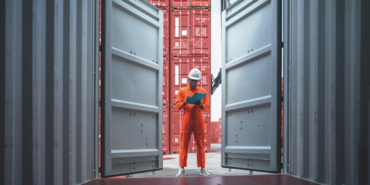
Even seemingly routine operations involving intermodal equipment can present risks. Tank containers, bulk containers, portable tanks and certain freight units may require internal inspections, cleaning or maintenance. Workers can be exposed to residual cargo vapours, oxygen-deficient atmospheres or toxic residues unless suitable controls are implemented.
The key point is that hazardous atmospheres do not respect organisational boundaries. Whether the worker is employed by the ship, terminal operator, logistics company or contractor is irrelevant. The hazard remains the same.
Culture matters as much as compliance
Many organisations have invested heavily in procedures and permit systems. Yet accident reports continue to reveal the same recurring themes: complacency, poor communication, inadequate supervision, production pressure and an unwillingness to challenge unsafe behaviour.
The UK P&I Club case study illustrates several of these factors. Senior personnel underestimated the hazards, crew members treated the task as a routine job, communication was ineffective, and junior personnel were hesitant to question decisions made by more senior colleagues. The company's stop-work authority also existed but was not used.
This highlights an important reality. Safety procedures only provide protection when workers feel empowered to use them. A successful enclosed space safety programme therefore requires more than compliance. It requires a culture in which questioning, challenging and stopping unsafe work are viewed as professional responsibilities rather than disruptions.
Safety procedures only provide protection when workers feel empowered to use them.
A moment's pause can save a life
The most effective control remains the simplest: stop and think before entry.
Has the atmosphere been tested?
Has adequate ventilation been established?
Is a valid permit in place?
Is there a rescue plan?
Are trained attendants present?
Have adjacent spaces also been considered?
Has everyone involved fully understood the hazards?
These questions may seem elementary, but history shows that enclosed space fatalities frequently occur when experienced individuals convince themselves that the rules can be bypassed "just this once".
Keeping the lessons alive
Industry regulations and procedures will continue to evolve, but paperwork alone will not eliminate enclosed space fatalities. The greatest improvements will come from organisations that continuously reinforce awareness, practise realistic emergency drills, encourage intervention and maintain a healthy respect for spaces that can become deadly without warning.
The UK P&I Club's enclosed space training animation is an excellent resource for initiating these discussions and challenging assumptions around risk. Rather than viewing enclosed space entry as a maritime issue alone, transport and logistics organisations should recognise its relevance across ports, terminals, warehouses and intermodal operations. Every worker, whether at sea or ashore, should ask the same question highlighted in the training video.
Could this happen where I work?
If the answer is "yes", then now is the time to review the controls before the next enclosed space becomes tomorrow's accident report.
now is the time to review the controls before the next enclosed space becomes tomorrow's accident report.
- Author
- Harry Palmer
- Date
- 06/10/2026