
CMAP by The Lab at Brookes Bell

The challenge
In the maritime industry, structural integrity is everything. Yet corrosion - often hidden beneath coatings, decks, and coverings - remains one of the most persistent threats to vessel safety and performance. Traditional inspection methods often require surface removal, downtime, and costly repairs, while still risking missed defects.
Non-destructive testing (NDT) is essential for identifying flaws like cracks, thinning, and corrosion without damaging the structure. However, conventional NDT techniques can be time-consuming, invasive, and limited in scope - especially when dealing with complex coatings or hard-to-reach areas.
With global regulations from the IMO, Lloyd’s Register, and other classification societies demanding rigorous inspection standards, vessel owners and operators need a smarter, more efficient way to stay compliant, reduce risk, and control costs.
The innovation
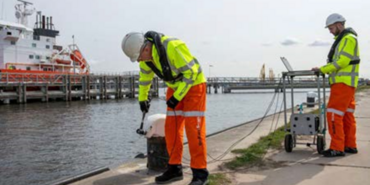
Developed over five years of research and refinement, CMAP (Corrosion Mapping and Analysis Platform) is The Lab at Brookes Bell’s cutting-edge, non-invasive inspection service. It delivers full material evaluation - without removing coatings or interrupting operations.
At the heart of CMAP is a highly advanced Pulsed Eddy Current Array (PECA) technology, capable of scanning through multiple layers of coatings and coverings to detect corrosion and material loss. The data is then transformed into a 3D visual dashboard, offering a clear, intuitive overview of:
- Steel condition
- Remaining wall thickness
- Material degradation
- Corrosion severity and spread
This enables vessel owners to make informed, proactive decisions - reducing downtime, avoiding unnecessary repairs, and ensuring compliance with classification standards.
How it works
- Non-invasive scanning: PECA technology scans through coatings like SynDeck, Camrex, teak, ceramics, and antifouling layers - no surface prep required.
- Advanced modelling: Data is processed using Brookes Bell’s proprietary CMAP software to generate 3D corrosion maps.
- Actionable insights: A user-friendly dashboard highlights areas of concern, enabling targeted repairs and efficient planning.
- Cost-efficient decisions: By identifying only the areas that need attention, CMAP helps avoid unnecessary material removal and repair costs.
Case study
CMAP has been rigorously tested and validated across a wide range of vessels, including Royal Navy Type T23 frigates and landing platform docks, Ro-Pax ferries, and Luxury superyachts.
In 2023, CMAP received official accreditation from both the British Royal Navy’s Warship Technical Authority (WTA) and Lloyd’s Register, confirming its reliability and value in real-world maritime environments.
The technology has since been rolled out across the entire Royal Navy fleet, setting a new benchmark for corrosion inspection in both military and commercial sectors.
Potential impact
CMAP is transforming how the maritime industry approaches vessel maintenance:
- Enhanced safety: Early detection of corrosion prevents structural failures and protects lives.
- Reduced downtime: Inspections can be performed while vessels remain in service.
- Significant cost savings: For example, scanning a superyacht deck through teak can save over 86% compared to traditional removal and replacement methods.
- Sustainability: Minimising unnecessary material removal reduces waste and environmental impact.
- Regulatory confidence: CMAP ensures vessels remain compliant with classification society standards
- Date
- 22/07/2025