
KALP GmbH – Automatic Lashing Platform (ALP)
The challenge
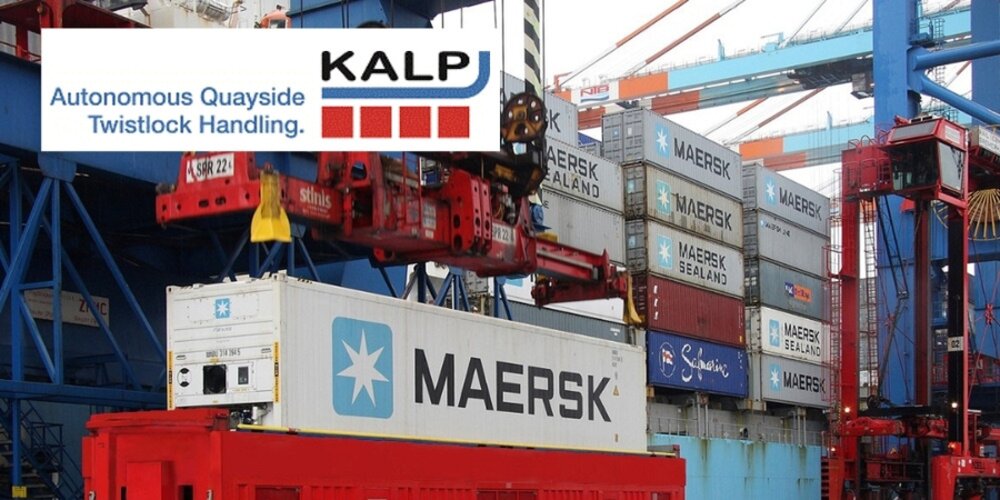
Despite advances in terminal automation, one critical safety risk has remained: the manual insertion and removal of twistlocks and stackers under suspended container loads. This task exposes stevedores to serious injury or fatality, especially in the travel zone of gantry cranes. Previous attempts to automate this process have fallen short, leaving a major gap in both safety and efficiency.
The innovation
KALP GmbH’s Automatic Lashing Platform (ALP) is the first and only system that fully automates the insertion and removal of twistlocks and stackers - eliminating the need for personnel to work near or beneath suspended loads.
Key features include:
- Fully autonomous operation powered by an internal hydraulic system using the container’s own weight - no external power required.
- High-capacity magazines holding over 1,000 twistlocks or 2,000 stackers, equivalent to a full bay of an Ultra Large Container Vessel.
- Remote monitoring and control via handheld device or terminal network integration.
How it works
The ALP is positioned beneath the container during loading or unloading. As the container is lowered, the ALP automatically engages or disengages twistlocks and stackers using its hydraulic system. The process is controlled remotely, keeping all personnel at a safe distance. The system is plug-and-play - requiring no changes to terminal infrastructure - and can be deployed in both greenfield and brownfield terminals.
Case study
The ALP was successfully implemented at a German terminal in August 2021. Since deployment:
- No personnel have been required to work under suspended loads, eliminating a major safety hazard.
- Productivity has increased, with faster, more consistent lashing operations.
- Operator acceptance has been high, with gantry crane and transport drivers reporting ease of use and improved workflow.
Potential impact
The ALP represents a breakthrough in terminal safety and automation. It:
- Eliminates one of the last major safety risks in container handling.
- Supports full terminal automation without compromising safety.
- Improves operational efficiency by reducing manual intervention.
- Requires no infrastructure changes, making it suitable for any terminal.
By closing the final gap in container terminal automation, the ALP sets a new benchmark for safe, efficient, and future-ready port operations.
- Date
- 22/07/2025