
Smart Bollard by Straatman Mooring Systems
The challenge
Until recently, ports had no way to continuously measure the forces acting on mooring lines. Mooring designs relied on theoretical models or maximum breaking loads (MBL), leaving a critical blind spot in real-world operations. In high-risk environments - strong currents, high winds, and busy waterways - this lack of real-time data can lead to catastrophic failures.
When mooring lines are overloaded, they can snap, causing vessels to drift uncontrollably. These incidents pose serious safety risks to personnel and infrastructure. Past events in major ports like Rotterdam and Antwerp have resulted in damages exceeding €150 million, highlighting the urgent need for a smarter solution - especially as climate change intensifies weather extremes and vessels continue to grow in size.
The innovation
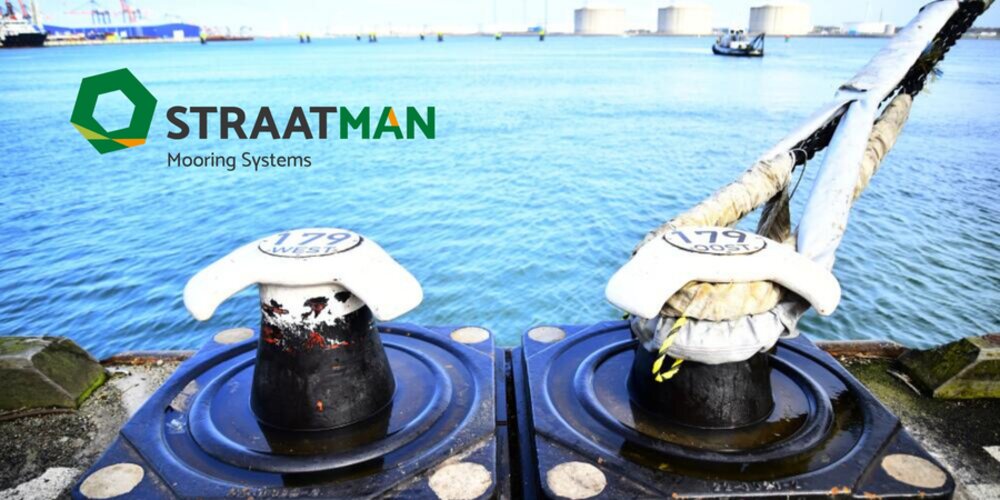
Developed in close collaboration with the Port of Rotterdam, the Smart Bollard is a game-changing advancement in mooring safety and efficiency. Installed like a standard bollard, it is embedded with advanced sensors that continuously measure:
- Load on mooring lines
- Line direction and angle
- Tide levels
- Weather conditions
- Vessel history
This data is transmitted in real-time to a secure dashboard, enabling port authorities and terminal operators to monitor mooring conditions live, set safety alarms, and integrate insights into broader port systems via API.
How it works
- Permanent installation: The Smart Bollard is fixed to the quay like a traditional bollard.
- Sensor integration: Internal sensors capture dynamic mooring line forces and environmental data.
- Real-time communication: Data is streamed to a central dashboard for live monitoring and historical analysis.
- User control: Administrators can manage access, configure alerts, and connect the system to other digital tools.
Case study
After rigorous development and testing - including simulations, bench tests, and field trials - the Smart Bollard was first piloted at the ECT Delta Terminal in Rotterdam in January 2021. The pilot delivered valuable insights and confirmed the system’s accuracy and durability.
Following its success:
- 6 Smart Bollards were installed at ECT Delta Terminal.
- 108 Smart Bollards were deployed along the new Prinses Amalia Quay in Rotterdam.
- Additional installations followed at the Port of Valencia (MSC Terminal) and the Port of Antwerp.
Potential impact
The Smart Bollard is transforming port operations by:
- Enhancing safety: Real-time monitoring helps prevent line breakages and vessel drift.
- Improving efficiency: Operators gain a complete picture of mooring forces, enabling better berth planning and faster decision-making.
- Reducing costs: Data-driven insights reduce reliance on tugs and other costly resources.
- Enabling growth: Ports can safely accommodate larger vessels with confidence.
- Date
- 22/07/2025