
TT Talk - The complexities of the military supply chain

When most people think about military logistics, they picture large-scale mobilisation during times of conflict. In reality, the movement of military-related cargo is a constant feature of global supply chains, even during peacetime. Weapons systems, launchers, munitions, missiles, propellants, grenades and their countless component parts are continually transported between manufacturers, storage facilities, ports and end users around the world.
With defence budgets increasing in many countries, the volume of military cargo moving through commercial supply chains is also growing. While some shipments are handled directly by military organisations, much of the movement takes place under commercial contracts, involving freight forwarders, road hauliers, port operators and shipping lines. This creates a highly specialised logistics environment where safety, security, regulatory compliance and political considerations must all align.
Not just another dangerous cargo
Military cargoes often fall within Class 1 dangerous goods, covering explosives and related articles. The risks vary significantly depending on the classification. At one end of the spectrum are Class 1.1 products, which present a mass explosion hazard capable of causing catastrophic destruction. Other cargoes may include mortars, grenades and propellants, each carrying their own unique handling requirements.
Classification is critical. For example, articles classified as 1.4S are designed such that, if ignited, hazardous effects remain largely confined within the packaging, with minimal external signs of initiation. Achieving a particular classification can have significant implications for transport costs, routing options and regulatory obligations.
In some industries there may be commercial pressure to secure classifications that reduce restrictions. However, within the military supply chain, the consequences of misdeclaration are severe. The shippers involved are typically subject to rigorous oversight, extensive testing procedures and elevated due diligence standards. While inadvertent misdeclaration can never be discounted entirely, the controls surrounding military cargo movements are generally robust.
Moving highly regulated cargo
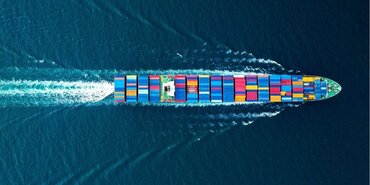
The vast majority of military cargo moves by sea and road, with air transport reserved for specific operational or urgent requirements. Shipment size often dictates the method of transport. Once volumes reach significant levels, chartering an entire ship may become more practical than using liner services. Historically, premium freight costs have reflected the complexity and risk associated with carrying explosive cargoes. Additionally, chartering offers the flexibility to call in remote ports with higher explosives limits (similar principles apply to air charter and remote runways).
Yet transportation is only one piece of the puzzle. Every movement must navigate an intricate web of regulations, licences and approvals. Export licences, transit licences and import licences may all be required. Trade control regulations must be satisfied. Political approvals may be necessary before cargo can even begin its journey.
An example of the complexity of systems related to safety and political permits running in tandem is the need for an “EX Number” competent authority approval document from the US DOT, and the need to comply fully with the US State Departments’ International Traffic in Arms Regulations (ITAR) at the same time.
Success depends on understanding how multiple regulatory frameworks interact. Requirements under dangerous goods legislation, security regulations and port security regimes frequently overlap. Managing compliance from origin to destination requires considerable expertise and meticulous planning.
Security never stops
If safety focuses on preventing an accident, security focuses on preventing deliberate interference.
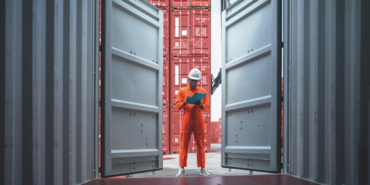
The military supply chain demands security provisions that go far beyond those normally associated with commercial freight. Cargoes may be subject to constant surveillance and continuous attendance throughout their journey. Personnel involved in the transportation process may require specific levels of security clearance, depending on the nature of the goods being moved.
Some movements employ a “witness load” system, where drivers remain with the cargo until they have physically witnessed it being loaded onto the ship, with the drivers at the destination port performing a similar role. This might involve obtaining passes for drivers to deliver into ports very near the time of sailing, rather than delivering to the “stack” by a pre-determined “close off date”, or by air mode going airside at airports. Customs and border inspections can create additional challenges, requiring constant monitoring to ensure the integrity of the shipment is maintained throughout the inspection process.
Theft remains a significant concern. Signature controls, detailed tally records and chain-of-custody documentation are commonly used to provide accountability. In many cases, security requirements are contractually imposed by the shipper, necessitating bespoke security solutions tailored to the specific cargo, route and threat environment. On occasion movement and security plans require government industrial security department approval, with the latter checking that the receiving county’s security equivalent department is also content.
It is common to see dedicated security plans developed for individual shipments, overseen by security-cleared cargo superintendents who coordinate all aspects of the movement.
Managing operational constraints
Beyond security and compliance, practical operational challenges also influence how military cargo is transported.
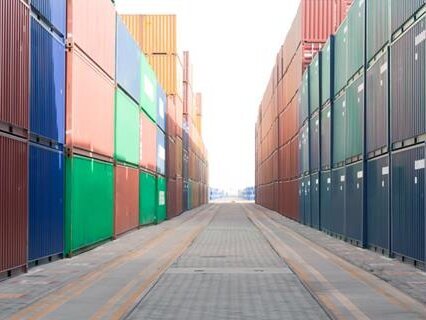
Explosive quantity limits may restrict how much cargo can be loaded onto a single ship, requiring shipments to be split or segregated to maintain safe separation distances. Port-specific restrictions may further influence routing decisions, particularly where local rules exceed international minimum standards. Storage of explosives in commercial ports prior to ship loading is very rarely permitted. The same applies at the ports of discharge, so direct delivery to and collection from ships is normal practice. Given that no one wants, or will necessarily be permitted, to delay a port call, gathering enough certified vehicles and drivers to produce constant supply under the hook is a challenge.
Information management is another often overlooked consideration. Details regarding cargo specifications, routes and schedules may be subject to strict security controls. Managing sensitive information securely becomes just as important as managing the cargo itself.
Perhaps the greatest challenge is ensuring that companies involved in the movement possess the necessary expertise. The military supply chain rewards specialist knowledge. Freight forwarders unfamiliar with the numerous regulatory frameworks, security requirements and operational constraints may underestimate the complexity of the task, creating significant risks for all parties involved.
The cost of delays in transit can escalate rapidly. In some cases, port authorities or coast guards have refused berthing to ship carrying even a single restricted cargo, requiring discharge at anchor using costly floating cranes, or even ordering the ship to return to its port of origin.
When mobilisation changes everything
While peacetime movements are challenging, periods of military mobilisation introduce an entirely new level of complexity.
Commercial ports may struggle to accommodate the sudden increase in cargo volumes, creating congestion and bottlenecks throughout ports and hinterland transport networks. Specialist resources, including ADR-qualified drivers, can quickly become scarce.
Dedicated military ports may provide additional capacity and fewer operational restrictions, but they bring challenges of their own. Unlike commercial ports, they cannot typically rely upon regular liner services and often therefore necessitate chartered ships. Even these facilities can experience significant congestion when demand surges.
Parking and “stabling” explosive cargoes becomes particularly problematic. Sales terms can further complicate matters. Where cargo is sold on an ex-works basis, a shipment delayed enroute may not be permitted to return to the manufacturing site. If the cargo is also unable to enter a port before its allocated loading window, secure temporary storage must be found. In some circumstances this may be at military facilities, but more commonly the options are limited to commercial truck parking locations that may not have been designed for such cargoes.
Sanctions, geopolitical tensions and rapidly changing political considerations can add further uncertainty.
A supply chain built on expertise
The movement of military cargo is among the most specialised activities in global logistics. Success depends upon much more than simply arranging transportation. It requires an understanding of explosives safety, international regulations, security planning, licensing requirements, political considerations and operational realities.
For participants in this area of the supply chain a prudent approach is to check that the path is clear before the journey is commenced by asking “do we have in place competent authority approval to transport and or store this cargo in every jurisdiction from door to door; do we have authority to possess, export, transit, import and possess in these same jurisdictions; are our liabilities limited and are there any restrictions under our liability insurance policy?”
As defence spending increases and global supply chains become more complex, the military logistics sector will continue to depend on highly skilled professionals capable of navigating this intricate landscape safely, securely and compliantly. Failure to do so, particularly where illegal trade, sanctions violations, or export control breaches are involved, may result in significant legal and financial consequences and could prejudice the availability of insurance cover. The consequences of getting it wrong are too significant to contemplate.
When most people think about military logistics, they picture large-scale mobilisation during times of conflict. In reality, the movement of military-related cargo is a constant feature of global supply chains, even during peacetime. Weapons systems, launchers, munitions, missiles, propellants, grenades and their countless component parts are continually transported between manufacturers, storage facilities, ports and end users around the world.
With defence budgets increasing in many countries, the volume of military cargo moving through commercial supply chains is also growing. While some shipments are handled directly by military organisations, much of the movement takes place under commercial contracts, involving freight forwarders, road hauliers, port operators and shipping lines. This creates a highly specialised logistics environment where safety, security, regulatory compliance and political considerations must all align.
Not just another dangerous cargo
Military cargoes often fall within Class 1 dangerous goods, covering explosives and related articles. The risks vary significantly depending on the classification. At one end of the spectrum are Class 1.1 products, which present a mass explosion hazard capable of causing catastrophic destruction. Other cargoes may include mortars, grenades and propellants, each carrying their own unique handling requirements.
Classification is critical. For example, articles classified as 1.4S are designed such that, if ignited, hazardous effects remain largely confined within the packaging, with minimal external signs of initiation. Achieving a particular classification can have significant implications for transport costs, routing options and regulatory obligations.
In some industries there may be commercial pressure to secure classifications that reduce restrictions. However, within the military supply chain, the consequences of misdeclaration are severe. The shippers involved are typically subject to rigorous oversight, extensive testing procedures and elevated due diligence standards. While inadvertent misdeclaration can never be discounted entirely, the controls surrounding military cargo movements are generally robust.
Moving highly regulated cargo
The vast majority of military cargo moves by sea and road, with air transport reserved for specific operational or urgent requirements. Shipment size often dictates the method of transport. Once volumes reach significant levels, chartering an entire ship may become more practical than using liner services. Historically, premium freight costs have reflected the complexity and risk associated with carrying explosive cargoes. Additionally, chartering offers the flexibility to call in remote ports with higher explosives limits (similar principles apply to air charter and remote runways).
Yet transportation is only one piece of the puzzle. Every movement must navigate an intricate web of regulations, licences and approvals. Export licences, transit licences and import licences may all be required. Trade control regulations must be satisfied. Political approvals may be necessary before cargo can even begin its journey.
An example of the complexity of systems related to safety and political permits running in tandem is the need for an “EX Number” competent authority approval document from the US DOT, and the need to comply fully with the US State Departments’ International Traffic in Arms Regulations (ITAR) at the same time.
Success depends on understanding how multiple regulatory frameworks interact. Requirements under dangerous goods legislation, security regulations and port security regimes frequently overlap. Managing compliance from origin to destination requires considerable expertise and meticulous planning.
Security never stops
If safety focuses on preventing an accident, security focuses on preventing deliberate interference.
The military supply chain demands security provisions that go far beyond those normally associated with commercial freight. Cargoes may be subject to constant surveillance and continuous attendance throughout their journey. Personnel involved in the transportation process may require specific levels of security clearance, depending on the nature of the goods being moved.
Some movements employ a “witness load” system, where drivers remain with the cargo until they have physically witnessed it being loaded onto the ship, with the drivers at the destination port performing a similar role. This might involve obtaining passes for drivers to deliver into ports very near the time of sailing, rather than delivering to the “stack” by a pre-determined “close off date”, or by air mode going airside at airports. Customs and border inspections can create additional challenges, requiring constant monitoring to ensure the integrity of the shipment is maintained throughout the inspection process.
Theft remains a significant concern. Signature controls, detailed tally records and chain-of-custody documentation are commonly used to provide accountability. In many cases, security requirements are contractually imposed by the shipper, necessitating bespoke security solutions tailored to the specific cargo, route and threat environment. On occasion movement and security plans require government industrial security department approval, with the latter checking that the receiving county’s security equivalent department is also content.
It is common to see dedicated security plans developed for individual shipments, overseen by security-cleared cargo superintendents who coordinate all aspects of the movement.
Managing operational constraints
Beyond security and compliance, practical operational challenges also influence how military cargo is transported.
Explosive quantity limits may restrict how much cargo can be loaded onto a single ship, requiring shipments to be split or segregated to maintain safe separation distances. Port-specific restrictions may further influence routing decisions, particularly where local rules exceed international minimum standards. Storage of explosives in commercial ports prior to ship loading is very rarely permitted. The same applies at the ports of discharge, so direct delivery to and collection from ships is normal practice. Given that no one wants, or will necessarily be permitted, to delay a port call, gathering enough certified vehicles and drivers to produce constant supply under the hook is a challenge.
Information management is another often overlooked consideration. Details regarding cargo specifications, routes and schedules may be subject to strict security controls. Managing sensitive information securely becomes just as important as managing the cargo itself.
Managing sensitive information securely becomes just as important as managing the cargo itself.
Perhaps the greatest challenge is ensuring that companies involved in the movement possess the necessary expertise. The military supply chain rewards specialist knowledge. Freight forwarders unfamiliar with the numerous regulatory frameworks, security requirements and operational constraints may underestimate the complexity of the task, creating significant risks for all parties involved.
The cost of delays in transit can escalate rapidly. In some cases, port authorities or coast guards have refused berthing to ship carrying even a single restricted cargo, requiring discharge at anchor using costly floating cranes, or even ordering the ship to return to its port of origin.
When mobilisation changes everything
While peacetime movements are challenging, periods of military mobilisation introduce an entirely new level of complexity.
Commercial ports may struggle to accommodate the sudden increase in cargo volumes, creating congestion and bottlenecks throughout ports and hinterland transport networks. Specialist resources, including ADR-qualified drivers, can quickly become scarce.
Dedicated military ports may provide additional capacity and fewer operational restrictions, but they bring challenges of their own. Unlike commercial ports, they cannot typically rely upon regular liner services and often therefore necessitate chartered ships. Even these facilities can experience significant congestion when demand surges.
Parking and “stabling” explosive cargoes becomes particularly problematic. Sales terms can further complicate matters. Where cargo is sold on an ex-works basis, a shipment delayed enroute may not be permitted to return to the manufacturing site. If the cargo is also unable to enter a port before its allocated loading window, secure temporary storage must be found. In some circumstances this may be at military facilities, but more commonly the options are limited to commercial truck parking locations that may not have been designed for such cargoes.
Sanctions, geopolitical tensions and rapidly changing political considerations can add further uncertainty.
A supply chain built on expertise
The movement of military cargo is among the most specialised activities in global logistics. Success depends upon much more than simply arranging transportation. It requires an understanding of explosives safety, international regulations, security planning, licensing requirements, political considerations and operational realities.
For participants in this area of the supply chain a prudent approach is to check that the path is clear before the journey is commenced by asking “do we have in place competent authority approval to transport and or store this cargo in every jurisdiction from door to door; do we have authority to possess, export, transit, import and possess in these same jurisdictions; are our liabilities limited and are there any restrictions under our liability insurance policy?”
As defence spending increases and global supply chains become more complex, the military logistics sector will continue to depend on highly skilled professionals capable of navigating this intricate landscape safely, securely and compliantly. Failure to do so, particularly where illegal trade, sanctions violations, or export control breaches are involved, may result in significant legal and financial consequences and could prejudice the availability of insurance cover. The consequences of getting it wrong are too significant to contemplate.
. The consequences of getting it wrong are too significant to contemplate.
- Author
- Josh Finch
- Date
- 06/10/2026