
Raising safety standards across the port estate
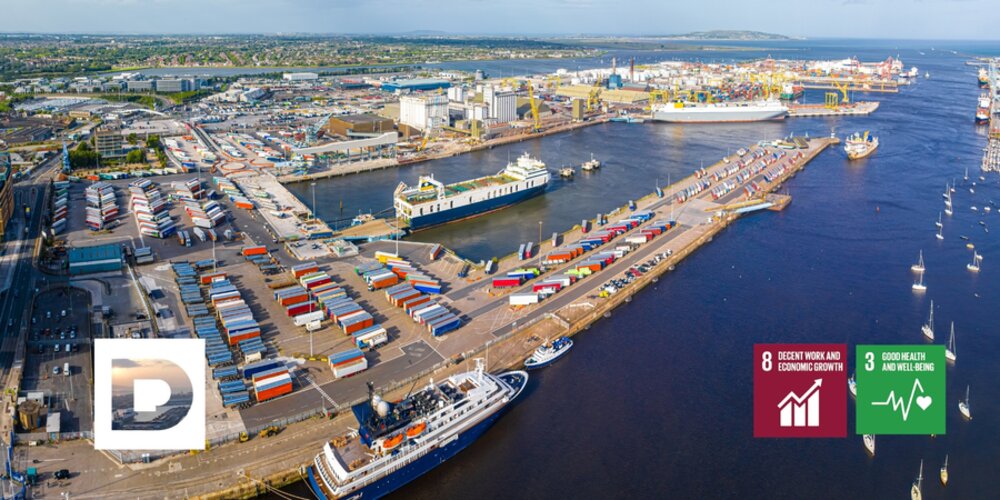
A key role of port authorities is to drive safety across their ports for the benefit of both port users and workers. Dublin Port’s SafePort initiative is a great example of programme which has transformed safety culture across Ireland’s busiest ports.
Collective effort
Launched in July 2022, SafePort brings together Dublin Port Company and seven terminal operators – Dublin Ferryport Terminals, Doyle Shipping Group, Irish Ferries, P&O Ferries, Peel Ports Group (MTL), CLdN (formerly Seatruck Ferries) and Stena Line – which collectively represent around 75% of the port’s workforce.
Dublin Port Company says its mission is ‘to ensure the port is a safe and healthy environment, with a commitment to ensuring the safety of its employees and other persons affected by its activities’. The aim is to create a unified, port-wide safety culture that protects workers, visitors and operations across the 261 ha estate.
By aligning safety practices, standardising procedures and promoting shared responsibility, SafePort has significantly enhanced safety, operational resilience and reduced risk.
Unified approach
Historically, each terminal within Dublin Port operated under its own safety protocols. The fragmented approach posed challenges in consistency of operational and safety standards. SafePort addressed this by harmonising safety standards across all operators within the port, ensuring that every port user – regardless of the terminal visited – is held to the same expectations.
The alignment has led to improved hazard awareness, streamlined incident response and a reduction in near-miss events. The collaborative nature of the initiative has fostered a sense of shared accountability, where safety is not just a terminal or departmental concern but a collective priority for all.
Golden rules
At the heart of the initiative are the SafePort Golden Rules, which are ten clear, actionable guidelines designed to promote safe behaviour and prevent accidents. These rules were developed collaboratively by the Dublin SafePort working group, drawing on expertise from across the port community and lessons learned from global best practices.
The ten rules are:
- Turn up fit for work and unimpaired by alcohol or drugs.
- Always use walkways provided.
- Be aware of lifting operations and moving machinery. Keep well clear.
- Follow traffic management. Keep to the speed limit. Wear seatbelts.
- Always think water safety. PFD must be worn when working within 1.5m of the quay wall.
- Wear correct PPE.
- Smoking in designated areas only. No littering
- Mobile devices approved usage only.
- Report the incident – Prevent the accident.
- Know the rules in the Terminals.
These rules are prominently displayed across the port estate and reinforced through signage, social media campaigns and educational materials. Their simplicity and clarity make them accessible to all port users, from long-serving staff to first-time visitors.
Training and awareness
SafePort places strong emphasis on training and awareness. Regular workshops, toolbox talks and induction sessions ensure that personnel are equipped with the knowledge and skills to operate safely. These sessions cover critical topics such as traffic management, working at height and emergency procedures.
The initiative also encourages open dialogue around safety, empowering workers to speak up about hazards and suggest improvements. This proactive approach has helped to foster a culture of continuous learning and vigilance.
In addition, Dublin Port has strengthened its collaboration with external agencies including An Garda Síochána, the Health and Safety Authority, and Customs and Revenue. These partnerships enhance the port’s ability to respond to incidents and ensure compliance with national safety standards.
Conclusion
The success of SafePort offers a model for other port authorities seeking to elevate their safety performance. By demonstrating the power of collaboration, standardisation and proactive engagement, Dublin Port has shown that safety excellence is achievable in complex, high-risk environments.
As global trade continues to grow and operational demands intensify, initiatives like SafePort will be critical in ensuring that ports remain safe, efficient and resilient. Dublin Port’s commitment to safety is not just a local achievement, it is a model for port authorities worldwide.
- Author
- Harry Palmer
- Date
- 25/02/2026