
Guidance note: Middle East developments - guidance for transport operator Members
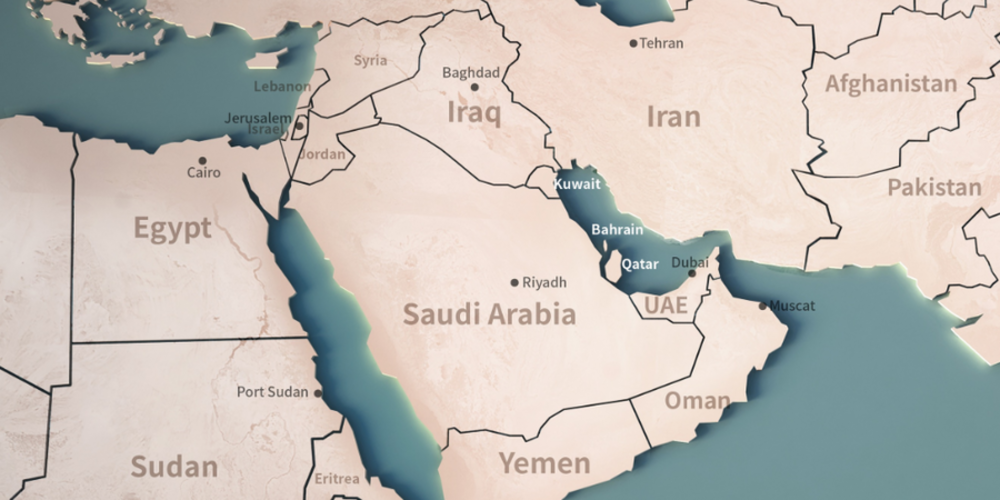
We write further to recent developments in the Middle East, including the evolving situation regarding Iran, the United States, and Israel. The dry commercial issues addressed in this note must of course be accepted in their necessary context, alongside the terrible human situation being faced in Iran, Israel and the Gulf states, and even beyond.
We are aware that Members are receiving enquiries from customers regarding both potential operational impacts and contractual implications. This note provides guidance based on the current position and may be supplemented by more comprehensive guidance should circumstances require.
Contractual Implications
The ongoing conflict may give rise to contractual issues, including circumstances where the Master of a carrying vessel elects to deviate from the agreed route for the safety of the vessel and crew. Responsibility for any resulting costs will depend on the terms of the relevant contract, in particular routing, deviation, and war-risk clauses.
Where a freight forwarder or NVOCC has issued a House Bill of Lading and has contracted with the Carrier on a back-to-back basis, the forwarder/NVOCC may be able to rely on the defences available to the Carrier if contracting with Carriers on terms that mirror, as far as possible, those agreed with their customers, in order to preserve back-to-back liability protections.
International conventions governing the carriage of goods by sea permit a Carrier to deviate from the agreed route to save life or property at sea, or where the deviation is otherwise reasonable. The current situation may, depending on the circumstances, be regarded as allowing “reasonable deviations”, potentially relieving the Carrier of liability for loss or damage to cargo resulting from such deviation.
Where carriage is undertaken on terms other than a bill of lading, the position will depend on the specific terms of the relevant contract. However, deviation or delay arising from war related risks may generally fall within force majeure provisions, where the circumstances giving rise to the delay, deviation, or damage are beyond the control of the forwarder and the Carrier.
Container Risks
If a carrying vessel is affected by the ongoing events whilst in a listed area such as the Arabian Gulf or Southern Red Sea (see Listed Area | War risk exclusions - TT Club) and insured containers are impacted, the insurance response will depend on whether Marine War Risk in the listed area have been reinstated or not. Members are reminded that War Risk on Land are generally excluded from cover in this region.
In light of the rapidly evolving situation, the Club’s position on existing and prospective Marine War Risk cover remains under review and may change in the coming weeks as circumstances develop.
Members should contact their broker or their usual TT Club contact for further clarification.
Communications with Customers
When speaking with their customers, Members may wish to:
-
Confirm that operations are continuing as normal where that is the case, unless advised otherwise by their subcontractors;
-
Where carriage is performed directly by the Member (without subcontractor involvement), ensure customers are kept appropriately informed of progress;
-
Reassure customers that the situation is being closely monitored;
-
Avoid speculation on potential outcomes or coverage implications; and
-
Advise customers, on a precautionary basis, to notify their cargo insurers.
Future Bookings
For future bookings, Members may wish to:
-
Build flexibility into contracts where possible (e.g. routing, timing, ports of call, storage options);
-
Review force majeure and war risk clauses carefully before committing, ensuring alignment with the intended trade and geography;
-
Avoid firm guarantees or inflexible delivery commitments in areas that may be affected by rapid geopolitical developments;
-
Consider alternative routings or contingency plans where exposure to higher risk zones may arise;
-
Avoid assumptions regarding insurance cover and seek confirmation where bookings involve heightened geopolitical exposure;
-
Factor in potential delays arising from airspace restrictions, port security measures, or regulatory interventions;
-
Ensure accurate and complete declarations of cargo type, destination, transit route, and storage arrangements at the booking stage;
-
Monitor official guidance and local authority updates relevant to the regions involved;
-
Maintain clear records of booking decisions, routing changes, and communications with counterparties; and
-
Customers should be encouraged to ensure that appropriate cargo insurance is in place prior to handing the goods over to you.
The Club will continue to monitor developments closely and will issue further guidance should the situation materially change. Our thoughts are with all those affected by these events.
- Date
- 02/03/2026