
TT Talk - How to avoid truck and trailer fires
Transport and logistics professionals need to continue checking the wheels and brakes of trucks and trailers carefully to avoid devastating vehicle fires. TT Club’s latest claims data reveals that around 60% of such fires start in the wheel and brake area, similar to data reported in 2021. Overheating brakes, leaking seals and hoses, poorly maintained wheel bearings, under-inflated tyres and road debris can all trigger a fire, leading to the complete destruction of vehicles and their cargoes.
latest claims data reveals that around 60% of fires start in the wheel and brake area
Overheating brakes
Vehicle operators need to be especially aware of the risk of overheating brakes. The way a truck is driven, particularly when loaded with heavy cargo, can give rise to extreme heat build-up under heavy braking conditions resulting in excessive brake temperatures. This can lead to wheel-bearing grease catching fire and setting light to the tyres.
Heavy braking can be of particular concern on drum brakes as the heat is more easily transferred through the drum to the tyre. Parking brakes can also remain partially applied – such ‘dragging brakes’ are often associated with the last trailer of a road train due to low air pressure.
An incorrectly positioned or locked component of the braking mechanism can lead to increased friction and heat build-up. It has also been reported that poor brake balance can cause disc brakes to overheat and set fire to bearing grease or debris.
Hydraulic systems for brakes, drives, steering and lift axles that develop even the smallest of leaks from seals and hoses can be particularly problematic. Hydraulic or lubricating oil expelled under pressure from even a pin-sized hole will create a mist, which can be particularly easy to ignite when a sufficient heat source is present.
Bearings, tyres and debris
Overtightened, worn or poorly lubricated wheel hub bearings can also create heat which may ignite bearing grease, tyres and other flammable material. A wheel hub bearing failure can cause additional load on a brake components, further increasing the risk of fire.
Tyre fires can occur due to under-inflated or flat tyres getting hot, both from increased friction with the road surface and from rubbing on dual tyres or chassis parts. Tyres are made from combustible materials – such as rubber, carbon, oil, benzene, toluene and sulphur – and sufficient heat build-up can start a fire that is hard to put out. This can also lead to a tyre blow out, potentially resulting in loss of control and spreading burning fragments to other parts of the vehicle.
Mud guards and spray flaps capture road surface spray which can contain flammable contaminants including oils. When sufficient heat builds, guards and flaps can catch fire and set light to the rest of the vehicle. Road debris can also become lodged under front or rear axles or wedged within wheel arches. If the debris contains a metal component which then hits a moving surface, sparks can cause the flammable parts of the debris to ignite.
Tyres are made from combustible materials – such as rubber, carbon, oil, benzene, toluene and sulphur – and sufficient heat build-up can start a fire that is hard to put out.
In addition to road debris, a notable nuance observed in Australia involves long-haul trucks striking wildlife, such as kangaroos. In several cases, animal carcasses have become lodged within wheel arches, where friction from moving parts can cause fur to ignite, rapidly spreading fire to the truck. While this scenario has been documented in Australia, it is a risk with the potential to manifest in other countries where large wildlife and long-distance road transport intersect.
Mitigating the risk
Regular maintenance of truck and trailer wheels, brakes, bearings, tyres, seals and hoses is crucial in mitigating the risk of vehicle fires. Keeping these components clean will also minimise the risk of combustion.
During first-use checks and at the start of each shift, it is prudent to check as far as is reasonably practicable that all tyres are correctly inflated, that there no leaks from hydraulic or pneumatic systems, and that mud guards and spray flaps are in good, clean condition. Such inspections should also be able to spot any poor repairs or maintenance.
A part not fitted or replaced correctly, an incorrect or incompatible part, or a critical protection device not re-installed could each give rise to a fire incident that could be avoided if found early. Spotting potential issues and having a defect procedure to ensure the issue is rectified will help in mitigating vehicle fire risks.
Dealing with a fire
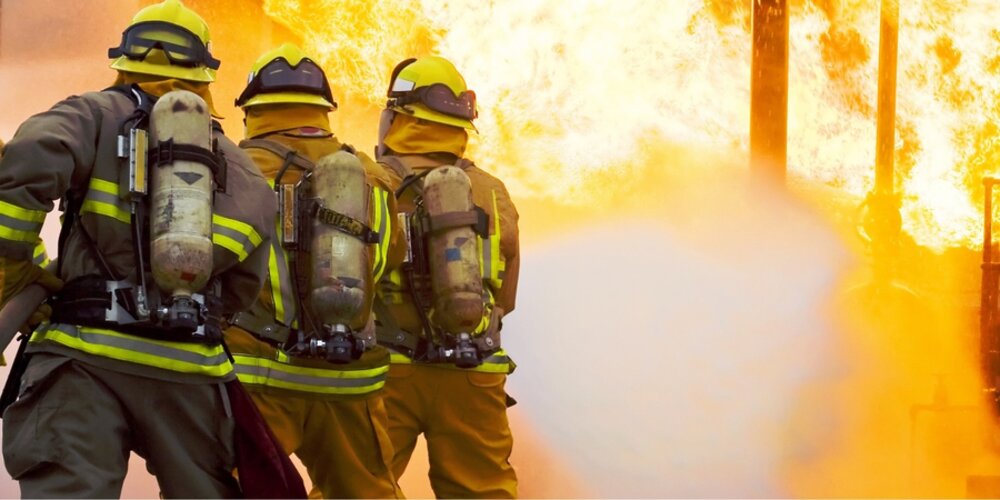
If a truck or trailer does catch fire, safety is the paramount concern and no-one should put themselves at risk of injury. Speed of response is vital too, as wheel and brake fires can be extinguished with minimal damage – not least as the cargo is temporarily protected by the trailer curtain or container structure.
Emergency services or trained firefighters should be immediately called to attend and, depending on the circumstances, a safety cordon should be set up around the vehicle.
If not extinguished quickly, wheel and brake fires can soon take hold, risking lives and causing devastating damage to the vehicle, cargo and nearby property and environment. There is no certainty as to how effectively a fire can be fought as factors such as weather, flammable materials, responder training and equipment, and how long the fire has been burning will all affect the ability to fight it.
Taking photographs of the vehicle and scene as circumstances develop can be of great help in figuring out the seat of the fire and the likely cause. All parties involved should contact their insurers at the earliest opportunity, who in turn will typically appoint investigators to establish cause and help to avoid future incidents.
Fire experts using forensic techniques will in most instances be able to find the seat of the fire. Even where the fire is catastrophic, fire patterns and vehicle maintenance records will usually enable them to spot the point of ignition.
Taking photographs of the vehicle and scene as circumstances develop can be of great help in figuring out the seat of the fire and the likely cause.
Conclusion
Truck and trailer fires happen worldwide and nearly two thirds start in the wheel and brake areas. Regular maintenance, daily visual inspections and frequent cleaning of wheels, brakes, bearings, tyres, seals and hoses are crucial in mitigating the risk of vehicle fires.
If a fire does break out, safety and speed of response are critical – both the vehicle and cargo can be saved if the blaze is put out safely and quickly. However, fires often spread rapidly and with potentially devastating effects, so prevention is always better than cure.
Documents
TT_Talk_-_Edition_330__Chinese_.pdf (504 kB) 26/01/2026
- Author
- Josh Finch
- Date
- 13/01/2026