
TT Talk – Reducing hot works fire risk
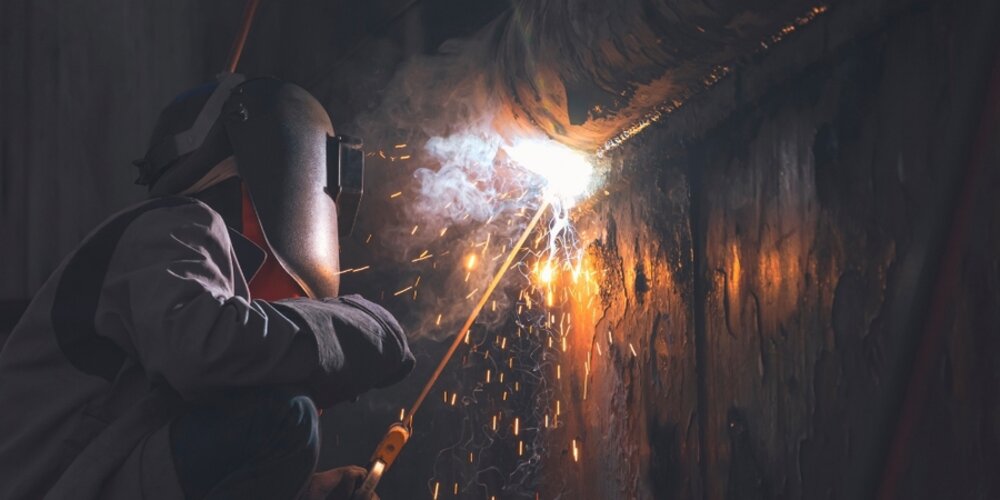
Failure to understand the risk of ‘hot works’ – such as welding and grinding – continues to result in devastating fires at ports, terminals and warehouses. Probably the most extreme example is the 2020 explosion at Port of Beirut that killed over 200 people: while the exact cause remains under investigation, early reports suggested the explosion was caused by a fire started by welding works. Port, terminal and warehouse operators need to ensure that all hot works activities are subject to consistently applied permits and controls.
Understanding the risk
Hot works include any activity that generates flame, heat or sparks – such as welding, cutting, grinding and soldering. These activities introduce a risk of fire or explosion, especially in confined spaces with flammable cargo, equipment or infrastructure. Fires caused by uncontrolled hot works can have catastrophic consequences: threatening lives, disrupting operations and causing environmental harm.
It is therefore essential that anyone involved in hot works, whether undertaking or planning the works in ports, terminals and warehouses, is aware of the fire risk where the works are being carried out. This should also include the potentially increased risk due to the cargo being handled, and how heat could be transferred or transmitted to other areas. The people involved should also have sufficient training and competence in the selection and use of the equipment that will produce the heat source, as well as in the portable fire extinguishers needed to put out any fires.
Essential controls
All hot works should have a hot works permit. As a minimum this should include where the work will be carried out and by whom, a description of the work and the proposed start and finish times. There should also be confirmation that all combustible materials will be removed from area or protected with non-combustible material; that suitable and serviceable fire extinguishers will be provided; and that a fire watch will be in place for a specific period during and after the work.
A competent person should be designated to oversee fire safety for all hot works. This person must assess whether tasks present an increased fire risk. They should evaluate the risks of burns, smoke or toxic fume inhalation, and potential harm to people beyond the immediate work area – including third parties and building occupants. They should also liaise with other site users, contractors and occupiers, and ensure that hot works does not interfere with fire detection or suppression systems.
Permit-to-work system
Ports, terminals and warehouses should implement a formal permit-to-work system for high-risk tasks such as hot works. This means such works are only allowed when a permit is issued – either physically or digitally – and all conditions are met. The designated competent person should physically monitor hot works to ensure compliance with the permit-to-work conditions and keep unauthorised people out of the area, using barriers if needed.
The permit-to-work conditions should specify that all hot works are stopped at least one hour before the end of the working day, or two hours in high-risk areas such as near flammable cargo. A fire watch should be maintained during and for a minimum of one hour after hot works, extended to two hours in high-risk areas. Fire watch duties need to be comprehensively handed over in the event of shift change.
The permit-to-work conditions should specify that all hot works are stopped at least one hour before the end of the working day, or two hours in high-risk areas such as near flammable cargo.
Communication and training
All staff and contractors involved in hot works should be trained in the permit-to-work system and on using firefighting equipment such as extinguishers and fire blankets. Fire safety procedures and hot works controls should be a regular part of shift briefings and site inductions for internal staff and visitors. Any updates or changes that may affect the operation should be communicated to staff and visitors promptly.
It is vital to ensure everyone involved remains competent and up-to-date on fire safety requirements. Operators should consider rolling out specific training and accreditation for those involved in hot works, such as the Fire Protection Association’s Hot works Passport scheme. This course is designed for supervisors and operatives who carry out risk assessments to complete hot works permits on construction sites, refurbishment projects and during maintenance work.
In the event of having to put out a fire, all staff should also be reminded of the importance of preventing firefighting water run-off from contaminating watercourses or the ground.
Conclusion
Ports, terminals and warehouses will always require hot works as part of ongoing maintenance works to equipment, facilities and infrastructure. Given the high potential for interface with flammable hazardous cargoes and the obvious risks involved, a robust hot works management system built on risk assessment, permits, training and vigilance is essential to protects people, assets and the environment.
Documents
TT Talk - February 2026 - Chinese Translation (414 kB) 03/02/2026
- Author
- Neil Dalus
- Date
- 03/02/2026