
TT Talk - When operational disruption meets metallurgy: why early detection matters for tank containers
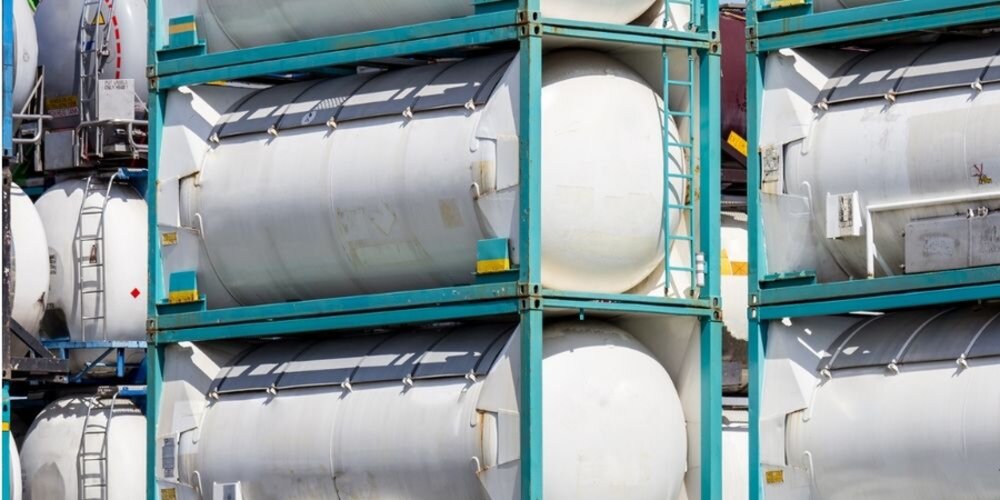
Tank containers sit at the very heart of some of the most safety critical activities across the global supply chain. From the carriage of hazardous cargoes to operating under demanding conditions and tight schedules, the integrity of these assets underpins not only commercial performance but also the protection of people, cargo and the environment.
It was against this backdrop that TT Club recently hosted a webinar in collaboration with Brookes Bell, bringing together loss prevention insight and specialist metallurgical expertise to explore corrosion mechanisms and the role of non-destructive testing (NDT) in managing emerging risks.
While the subject matter was technical, the implications for operators, owners and charterers are anything but academic.
Claims experience shining a light on corrosion risk
From TT Club’s perspective, one of the unique advantages of working so closely with Members is the ability to observe emerging risk trends through claims experience. Over recent years, that experience has highlighted a noticeable increase in corrosion related issues in tank containers, particularly pitting corrosion.
This trend has not appeared in isolation. Prolonged congestion across ports, depots and terminals, extended tank turnaround times, and operational delays have all contributed to tanks spending longer periods idle. In many cases, tanks have been left empty dirty, creating conditions in which corrosion mechanisms have more time to develop.
Pitting corrosion is especially problematic because it is often insidious in nature. Damage can be highly localised and difficult to detect visually until it reaches a point where it becomes a serious integrity concern. Encouragingly, recent claims data suggests that this trend may be moderating slightly as operations normalise. However, the underlying risk has not disappeared.
If anything, the experience of recent years has reinforced how quickly operational disruption can translate into physical degradation of assets. As one global disruption subsides, another often takes its place. The lesson for the industry is clear: resilience depends not just on operational planning, but on understanding how disruption interacts with asset condition over time.
The importance of inspection and early detection
A central theme of the webinar was the importance of inspection regimes and the value of early detection when things begin to go wrong. This is where metallurgy and surface condition play a critical role.
Brookes Bell provided insight into how stainless steels behave in service, explaining that while these materials are inherently corrosion resistant, that resistance depends heavily on the integrity of the passive oxide layer that forms on the surface. Damage to this layer – whether through mechanical means or contamination – can significantly reduce corrosion resistance if not properly addressed.
The discussion highlighted the role of cleaning, pickling and etching in removing adherent oxide scale, followed by passivation as a critical final step. Although stainless steels can passivate naturally, controlled passivation treatments help produce a thicker, more protective oxide layer, increasing resistance to corrosion.
Nitric acid, for example, is used after thorough surface cleaning to dissolve embedded or smeared iron left behind by mechanical processes. This leaves a surface with a higher chromium concentration, resulting in a more protective passive layer and giving the tank the best possible chance of resisting corrosion in service.
Prevention starts with good practice
When discussion turned to prevention, the message was consistent: good procedures and disciplined maintenance remain the foundation of corrosion control.
Regular inspections, particularly during mandatory 2½‑year and 5‑year tests, are essential. Areas flagged during inspections should be closely monitored over time, rather than treated as one-off findings. Maintenance, proper discharge, and thorough expedient cleaning after cargo carriage were all emphasised as key risk‑reduction measures.
Regular inspections, particularly during mandatory 2½‑year and 5‑year tests, are essential. Areas flagged during inspections should be closely monitored over time, rather than treated as one-off findings
Cargo compatibility also plays an important role. The selection of appropriate stainless-steel grades – including consideration of alloying content and corrosion resistance indicators – needs to align with the nature of the cargo being carried. Using the correct tank for the service is a fundamental but sometimes overlooked aspect of corrosion prevention.
Operational procedures matter too. Examples were discussed where tanks carrying cargo under inert conditions were partially discharged and used as static temporary storage, inadvertently creating conditions conducive to corrosion. Clear procedures for such scenarios are critical.
The session also touched on interim inspection techniques. While not a replacement for statutory inspections, relatively simple monitoring tools can be used to assess the condition of the passive layer. Detecting a reduction in passivity can provide an early warning of breakdown before visible corrosion develops.
Where advanced NDT fits in
Non-destructive testing was positioned as a targeted tool rather than an everyday solution. Advanced NDT techniques can be time‑consuming and costly if used indiscriminately, but they have a clear role in specific circumstances.
One such scenario is where damage has already occurred and a robust evidence set is required. Detailed mapping of corrosion damage and enhanced information on severity can support technical decision making and, where relevant, claims analysis.
Another application is preventative. For asset owners hiring tanks to customers or other operators, deploying NDT prior to the carriage of particularly aggressive cargoes or extended voyages can establish a clear baseline condition. This creates an audit trail showing that the tank was in good order at the start of the hire period.
Equally, customers or operators may see value in post discharge inspections to demonstrate that an asset was handled correctly and returned in appropriate condition. From an insurance perspective, this type of documented evidence trail can help de‑risk the transit by reducing uncertainty around when and how damage may have occurred.
A shared responsibility for asset integrity
The webinar reinforced a key message: corrosion risk is rarely the result of a single failure. It sits at the intersection of materials science, operational practice, inspection discipline and disruption management.
By combining TT Club’s loss prevention insight with Brookes Bell’s metallurgical expertise, the session highlighted how early detection, good procedures and targeted use of technology can work together to protect asset integrity.
As operational challenges continue to evolve, the industry’s ability to anticipate how disruption affects physical assets will remain critical. Investing time and attention in inspection regimes and understanding corrosion mechanisms is not simply a technical exercise – it is a fundamental part of keeping people safe, cargo secure and the supply chain moving.
The webinar reinforced a key message: corrosion risk is rarely the result of a single failure. It sits at the intersection of materials science, operational practice, inspection discipline and disruption management.
- Author
- Mike Yarwood
- Date
- 04/08/2026