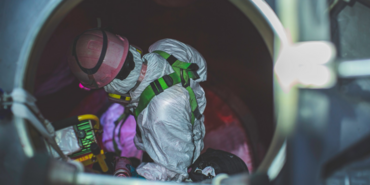

Water-based forensic marking offers a cost-effective anti-theft solution

Most systems use microdots in an adhesive liquid but one, SmartWater, is water-based and contains coded microscopic particles. Developed in the UK over 25 years ago, it lasts at least five years on outdoor items, is non-toxic and – uniquely – can be manually or automatically sprayed on would-be thieves. The product’s effectiveness lies in its ability to link individuals and stolen goods back to the scene of the crime using the liquid’s unique code, providing police with hard forensic evidence. Criminals, aware of the risk of being marked and found, are also less likely to target sites that clearly show they are protected by SmartWater. Independent research in the UK found that 74% of interviewed criminals would avoid committing crimes where SmartWater signage was present, highlighting the psychological impact of the technology. The solution is already widely used in Britain, where its brand recognition and proven track record – boasting a 100% conviction rate in contested court cases – make it a formidable deterrent. Internationally, SmartWater is deployed in various forms and there are now forensic laboratories in the UK, France and the USA that can read the liquid code.
Supply chain applications
In addition to tagging transport assets and cargoes, water-based forensic marking is particularly useful for deterring thefts of increasingly high-value items such as copper and electrical vehicle (EV) charging cables. The technology is now widely used across solar farms, wind farms and communication sites, as well as in new products like Cable Guard. This is a patented EV cable protection system which incorporates SmartWater in its sheathing – if tampered with, the liquid is released and marks the thief, stolen cable and even the getaway vehicle, providing a comprehensive forensic trail. DeterTech continues to explore new applications for water-based forensic marking, from ammunition tagging to protecting antiquities in conflict zones. Collaborative development with industry partners is also encouraged, such as integrating SmartWater into security seals or curtain-sided vehicles. This openness to blue-sky thinking invites stakeholders to consider novel ways to enhance supply chain and asset security.
Water-based forensic marking can provide a valuable extra layer of protection to global supply chains.
Integrating with physical security
DeterTech also provides physical site security systems to complement its water-based forensic marking solution. In 2019, the company bought PID Systems, a UK provider of perimeter intruder detection systems, followed by Danish temporary site security firm SmartGuard in 2022. Products include the PID 360, a battery-powered 360⁰ mobile monitoring unit with cameras, movement sensors, sirens and lights. Often described as the ‘Dalek’, these overt surveillance units are widely used in the UK and Europe on construction sites, vehicle parks, goods yards and other secure compounds. The units detect movement, issue audible and visual warnings, and send video clips to DeterTech’s 24/7 alarm receiving centre. This rapid escalation process ensures that any potential criminal activity is quickly spotted and dealt with. Also, with their distinctive blue and yellow chequered design, they are often mistaken for police equipment, further enhancing their deterrent effect. For monitoring larger sites, 5.2 m mobile tower systems with pan, tilt and zoom cameras can work in tandem with PID 360 units. The combination of mobile camera surveillance and forensic marking creates a layered security approach: any unauthorised presence is detected and recorded while forensic marking ensures that any stolen items or individuals involved can be traced.
Data-led approach
DeterTech also has a crime intelligence department, collecting data from clients, insurance companies and police forces in the UK and Europe. This unique access to police crime data enables the company to build risk matrices, assess vulnerabilities and tailor security solutions to specific sites and threats. Working closely with organisations such as Opal, the UK’s national police intelligence unit focused on serious organised acquisitive crime, the company can request targeted crime data and support live police operations. The resulting strategic focus of ‘predict, deter and detect’ ensures that the company’s security measures are not only reactive but also proactive, predicting criminal behaviour and deploying resources where they are most needed.
Conclusion
Forensic marking systems such as SmartWater can provide an easy and cost-effective way for transport and logistics businesses to protect assets and cargoes from theft. In addition to tagging items – and the criminals who try to steal them – with a unique and traceable code, the warning signage alone acts as strong anti theft deterrent. Together with mobile site surveillance units and a data-driven approach, water-based forensic marking can provide a valuable extra layer of protection to global supply chains.
First published January 2026
- Author
- Paul Raw
- Date
- 31/03/2026

09/10/2026
Ozan Durak named YLP Global Winner at 2026 FIATA World Congress
FIATA, the International Federation of Freight Forwarders Associations, in partnership with TT Club, is pleased to announce the 2026 Global Winner of the FIATA Young Logistics Professionals (YLP) Award, presented during the 2026 FIATA World Congress in Milan, Italy, during the 100th years of FIATA.