
Dangerous goods - quick reference guides - Class 5: Oxidising substances and organic peroxides
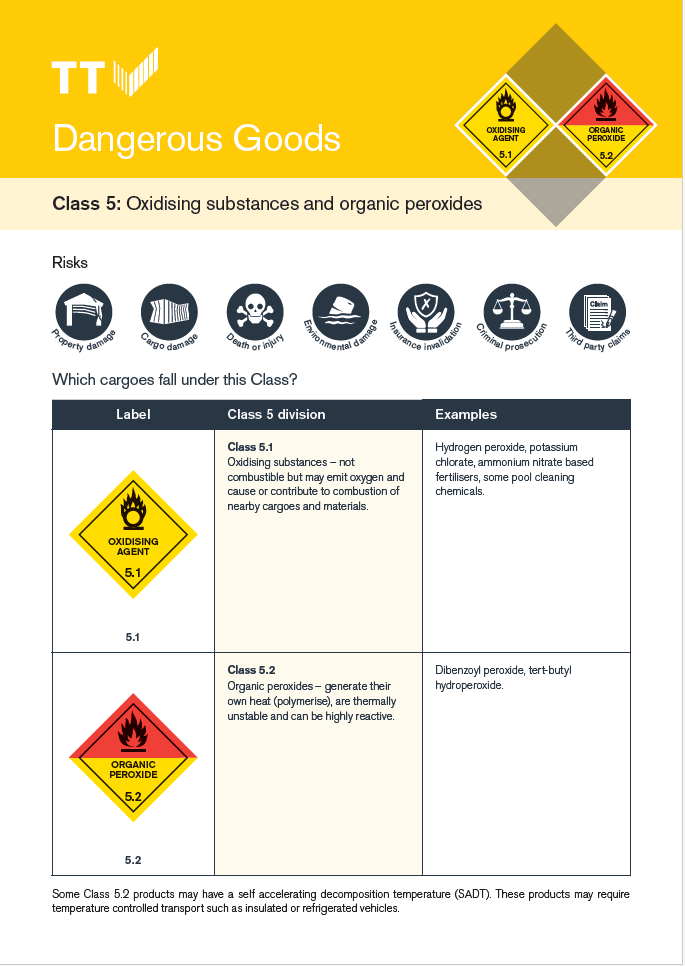
Class 5 dangerous goods include oxidising substances and organic peroxides that can intensify combustion or react dangerously. They pose risks such as property damage, cargo damage, injury, environmental harm, insurance invalidation, and potential criminal prosecution.
Classification & Examples:
5.1 Oxidising Substances: Not combustible but emit oxygen, increasing fire risk.
Examples: Hydrogen peroxide, potassium chlorate, ammonium nitrate fertilisers, pool cleaning chemicals.
5.2 Organic Peroxides: Thermally unstable, generate heat, and can polymerise.
Examples: Dibenzoyl peroxide, tert-butyl hydroperoxide.
Some Class 5.2 products have a Self-Accelerating Decomposition Temperature (SADT) and may require temperature-controlled transport (e.g., insulated or refrigerated vehicles).
Key Handling Guidelines:
- Packing: Use only approved packaging; never repackage without expert advice; avoid damaged containers.
- Storing: Store in well-ventilated, temperature-controlled areas; away from heat, ignition sources, and incompatible cargo (e.g., Class 1 explosives, Class 3 flammable liquids, Class 8 corrosives); inspect regularly; train staff in emergency response.
- Transporting: Keep risk assessments updated; segregate from reactive cargo; secure loads; comply with CTU Code; never allow ignition sources near cargo; have a security plan for high-consequence loads.
Handling:
Never expose to temperature deviations; never throw, drop, or drag cargo; maintain emergency response plans; communicate clearly across the supply chain.
Documents
Dangerous Goods - Class 5 (265 kB) 30/11/2025
- Date
- 11/12/2025