
TT Brief - temperature controlled air cargo shipments
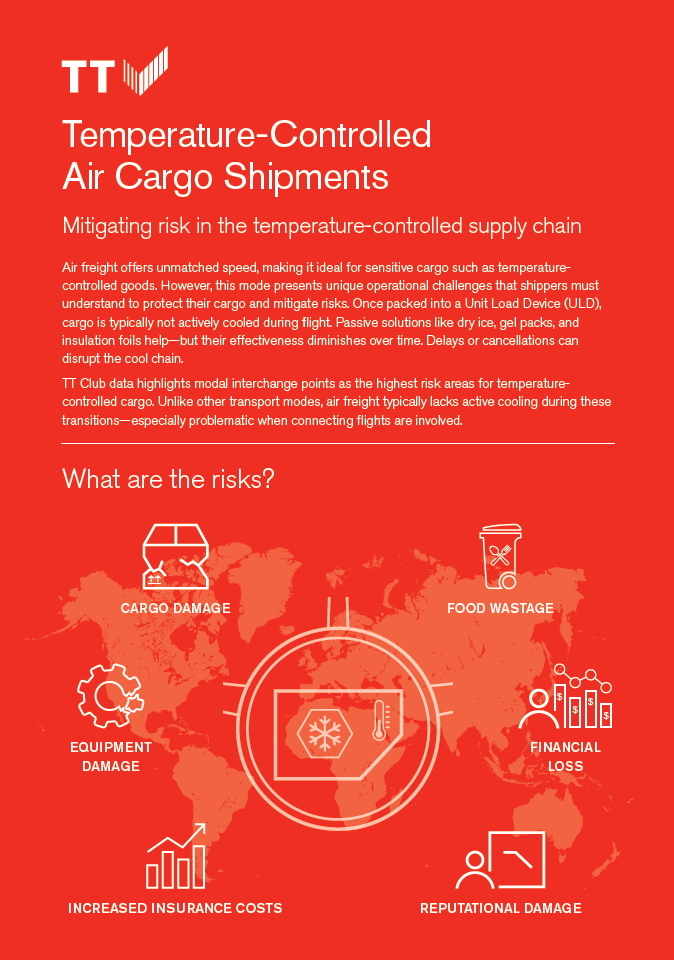
Air freight is indispensable for transporting temperature-sensitive goods, necessitating careful handling to address unique operational challenges. Due to the nature of air travel, cargo placed in a Unit Load Device (ULD) typically lacks active cooling, relying instead on passive methods such as dry ice and gel packs. While these can be effective initially, their utility declines over time, making it crucial for shippers to manage delays or cancellations that may disrupt the cold chain.
Data indicates that modal interchange points pose the highest risk for temperature-controlled shipments. Such transitions, often occurring during connecting flights, can significantly jeopardise the integrity of the cargo. Common risks include damage to cargo and equipment, food wastage, financial losses, increased insurance premiums, and reputational harm.
To mitigate these risks, stakeholders, including shippers, freight forwarders, and carriers, must invest in effective strategies. This involves proper packaging of goods, pre-cooling cargo, incorporating temperature control redundancies, obtaining reliable insurance, and selecting trustworthy transport partners. Legal limitations regarding liability are also essential to consider, as varying international conventions may cap recourse.
In the event of a claim, thorough documentation and communication are vital to assess coverage and to act prudently to prevent further losses.
Proactive measures, such as investing in insulated packaging and covert temperature sensors, can significantly reduce risks. Moreover, routes requiring multiple connections, especially in hot climates, should be approached with caution, particularly for lower-value cargo.
Engaging in comprehensive risk management, including consultations with experts, can substantially enhance the resilience of the temperature-controlled supply chain.
Key takeaways
- Air freight relies on passive cooling methods post-packaging.
- Modal interchange points are risk hotspots for temperature-sensitive cargo.
- Proactive measures and expert consultations are essential for risk mitigation.
Frequently asked questions
What are the main risks in temperature-controlled air shipments?
Key risks include cargo damage, food wastage, financial loss, and reputational harm.
How can I mitigate risks for my temperature-sensitive cargo?
Use proper packaging, pre-cool items, ensure redundancy in cooling measures, and consult experts.
What should I do in the event of a claim?
Review controls, gather documentation, and evaluate your insurance coverage promptly.
Documents
TT Brief - Temperature-Controlled Air Cargo Shipments (760 kB) 28/01/2026
- Author
- Mike Yarwood
- Date
- 29/01/2026