
TT Club - Dangerous goods quick reference guides: Class 8: Corrosive substances
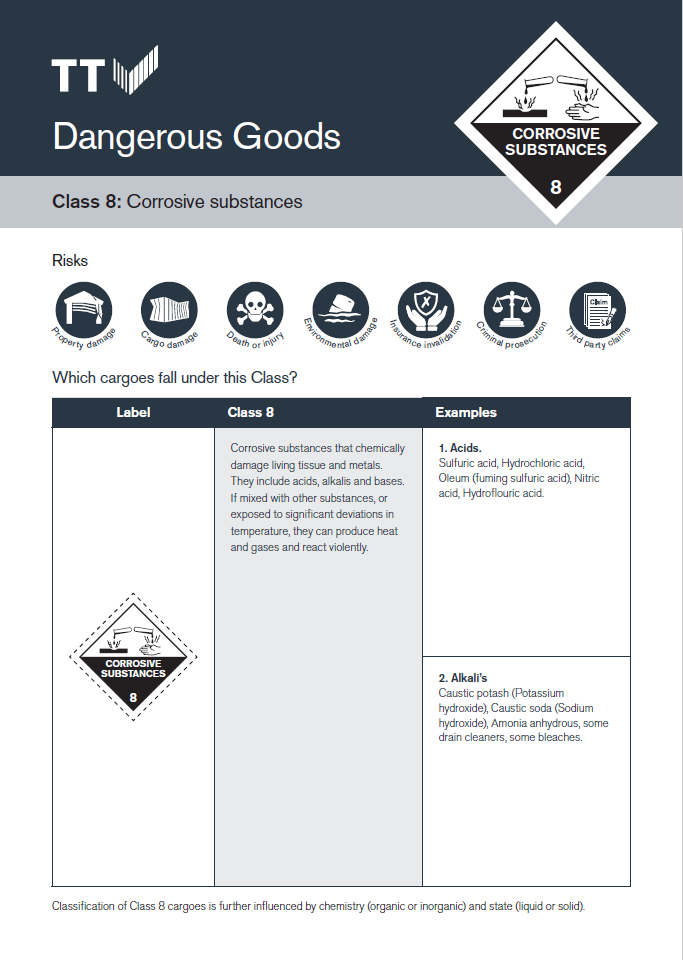
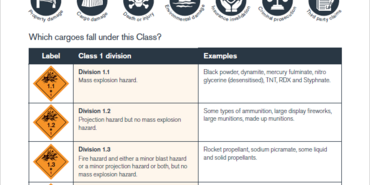
Class 8 dangerous goods include corrosive substances that chemically damage living tissue and metals. They can react violently, produce heat and gases when mixed with other substances or exposed to temperature deviations. Risks include property damage, cargo damage, injury, environmental harm, insurance invalidation, and potential criminal prosecution.
Examples:
Acids: Sulfuric acid, Hydrochloric acid, Oleum (fuming sulfuric acid), Nitric acid, Hydrofluoric acid.
Alkalis/Bases: Caustic potash (Potassium hydroxide), Caustic soda (Sodium hydroxide), Ammonia anhydrous, some drain cleaners, some bleaches.
Classification is influenced by chemistry (organic/inorganic) and state (liquid/solid).
Key Handling Guidelines:
- Packing: Use only approved containers; never use damaged or overfilled packaging; clean containers before refilling; keep spill management equipment nearby; choose packaging material carefully.
- Storing: Store in well-ventilated, temperature-controlled areas; away from heat, ignition sources, and incompatible cargo; close to ground; inspect regularly; train staff in emergency response; alert DG competent person if issues arise.
- Transporting: Keep risk assessments updated; secure cargo; comply with CTU Code; never assume segregation rules are the same for all modes; avoid exposure to moisture and temperature deviations.
Handling:
Never throw, drop, or drag cargo; maintain emergency response plans; communicate clearly across the supply chain.
Documents
TT_DG_Docs_CLASS_08.pdf (250 kB) 30/11/2025
- Date
- 11/12/2025