
TT Talk - Legal Eagle - When general average claims fail: unseaworthiness and crew competence under the spotlight

General Average (GA) is based on the principle that when extraordinary measures, such as sacrificing property or incurring exceptional costs are taken to protect a maritime venture, the owners of property that completes the voyage safely must share the resulting loss or expense. These contributions are calculated in proportion to the value of the property that arrives intact.
The concept of GA dates back to the earliest days of maritime trade, with roots in ancient Greek practices. It represents one of the oldest forms of risk-sharing, predating modern insurance, where risk is transferred to another party in exchange for a premium. The principle remains relevant today, ensuring fairness when sacrifices are made for the common safety of a voyage.
A freight forwarder with no property onboard will generally not be required to contribute in GA, however, an NVOCC or shipping line with owned or leased containers onboard may need to contribute based on the value of the container shells. Other parties with property interests such as cargo owners, shipowners, and time charterers (for bunkers) among others, are typically called upon to contribute.
The York-Antwerp Rules (YAR) govern GA and are often included in contracts of carriage to ensure uniform, commercially practical handling of GA cases. The latest version is YAR 2016, though earlier versions (1994, 2004) may still be adopted by agreement.
Recent legal cases have highlighted situations where property interests may be exempt from GA contributions, challenging this long-standing principle.
The law
Rule D of the York-Antwerp Rules provides as follows:
“Rights to contribution in general average shall not be affected, though the event which gave rise to the sacrifice or expenditure may have been due to the fault of one of the parties to the adventure; but this shall not prejudice any remedies or defences which may be open against or to that party in respect of such fault.”
Rule D preserves the right to GA contribution even if the sacrifice or expenditure resulted from one party’s fault, keeping fault issues out of the initial stages of the adjustment. However, its second part clarifies that such fault does not preclude legal remedies or defenses against the responsible party.
Lord Hamblen in the Supreme Court case of CMA CGM Libra confirmed that “A shipowner is not entitled to recover general average contributions from the owners of the cargo where the loss or expenditure was caused by its ‘actionable fault’ which includes any causative breach of the terms of the relevant contract of carriage”
Fault allegations frequently implicate the shipowners, typically on the basis of the vessel’s unseaworthiness or a failure to exercise due diligence as required under Article 3(1) of the Hague Rules.
The most obvious cases of vessel unseaworthiness involve physical defects or inadequate equipment. However, vessels have also been deemed unseaworthy for lacking required charts, poor passage planning, incompetent or insufficiently trained crew, inadequate crew numbers, or insufficient bunkers for the voyage.
The Happy Aras
In this case, the claimant, owners of the bulk carrier Happy Aras had declared GA following her grounding in March 2023. A GA adjustment was finalised in December 2023.
At the time of the grounding, the vessel had been under way from Reni in Ukraine to Mersin in Turkey with a cargo of soybeans. The Master had taken over on the bridge at 20.00 and AIS showed that navigation did not follow the passage plan from that point. According to AIS, the grounding occurred at 20.58, at which time the Master was alone on the bridge without a lookout. The deck log had not been annotated at all after 20.00.
The shipowner sought GA contribution from the defendant cargo insurer, who refused payment on the grounds that the vessel was unseaworthy, specifically, that it lacked a competent crew, particularly the Master—and that there was no proper passage planning system or due diligence in planning, as required under IMO guidelines.
Admiralty Registrar Davison dismissed the GA contribution claim, holding that:
- A shipowner cannot recover GA contributions if loss or expense stems from its actionable fault, including breach of seaworthiness obligations. Under the Hague Rules, the carrier bears the burden of demonstrating that due diligence was exercised to make the ship seaworthy before and at the commencement of the voyage.
- A defective passage plan can render a vessel unseaworthy, and the crew must not lack essential skill or knowledge.
- The Master was incompetent, failing to record waypoints, deviating from the passage plan, neglecting lookouts, ignoring warnings, and falsifying logs, amounting to a complete dereliction of duty and making the vessel unseaworthy.
- The shipowner was required to demonstrate due diligence in appointing and supervising the Master. However, aside from the owner’s hearsay statement, there was minimal evidence of such diligence. For instance, copies of the Master’s positive references and performance evaluations were never disclosed.
- Though basic, the passage plan would have prevented grounding if followed; cargo insurers had to prove its defects were causative.
Conclusion
The Happy Aras case confirms that the well-established legal principles of due diligence and seaworthiness extend to crew competency and passage planning, just as they apply to any other aspect of seaworthiness. This decision underscores the importance for shipowners to demonstrate due diligence through reliable evidence. The evidentiary burden rests with the shipowner, and certificates of competency alone are insufficient to meet this requirement.
GA claims are generally not made against freight forwarders because they typically do not own property involved in the venture. Although freight forwarders have no direct liability for GA contributions, it is advisable for them to inform their liability insurer of any involvement in an incident if unexpected circumstances arise. Shipping lines or NVOCCs with leased or owned container shells onboard the vessel will be liable for GA contributions based on the value of those containers. They should immediately notify their carrying equipment insurer of the incident and forward any GA guarantee request received. The insurer will then handle the required paperwork and communicate with the average adjuster on their behalf. Beneficial cargo owners should also promptly notify their cargo insurer and forward any GA guarantee request received. Standard marine cargo policies typically cover GA contribution costs, and the cargo insurer will take over the process of providing the guarantee and liaising with the average adjuster.
Critics argue that GA is outdated, as modern insurance can address losses and most incidents now arise from negligence rather than genuine sacrifices for common safety; they also contend that GA adjustments are slow, costly, and often place an unfair burden on cargo owners. Supporters, however, maintain that GA remains essential for fairly sharing losses in maritime emergencies and plays a crucial role in preventing costly disputes, warning that abolishing it could lead to uncertainty and inequitable cost allocation. Emerging technologies may help address GA’s current deficiencies such as lengthy and complex adjustments and valuation of salvaged property, helping to keep GA relevant in modern maritime practice.
Unity Ship Group S.A. -v- Euroins Insurance JSC (Happy Aras) [2025] EWHC 7 (Admty)
The CMA CGM Libra [2021] UKSC 51
Documents
TT Talk: May - Chinese translation (641 kB) 08/06/2026
- Author
- Abdul Fahl
- Date
- 12/05/2026
09/10/2026
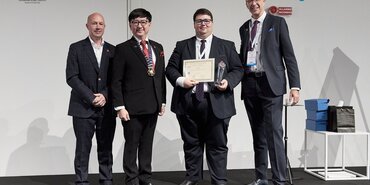
Ozan Durak named YLP Global Winner at 2026 FIATA World Congress
FIATA, the International Federation of Freight Forwarders Associations, in partnership with TT Club, is pleased to announce the 2026 Global Winner of the FIATA Young Logistics Professionals (YLP) Award, presented during the 2026 FIATA World Congress in Milan, Italy, during the 100th years of FIATA.