
TT Talk - Shore Power 2030
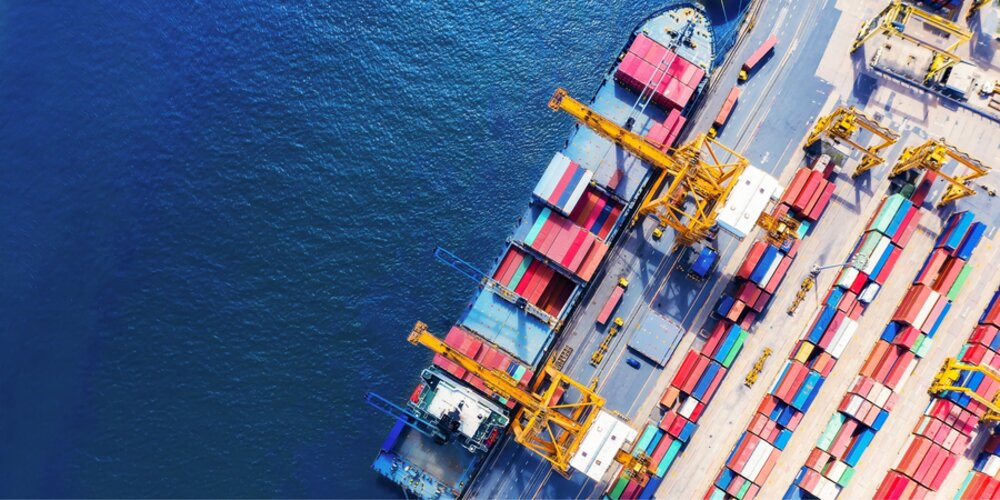
Ports and shipping lines need to explore every option to decarbonise their operations to reduce emissions and meet climate targets. One solution gaining traction in the ports sector is onshore power supply (OPS), also known as shore-side electricity or ‘cold ironing’. This allows ships at berths to switch off their fossil-fuel engines (so they go cold) and run on electricity from the shore, improving air quality in ports.
While OPS is now a mature technology, high costs and uncertain revenue models have slowed uptake worldwide. But incoming European legislation and mounting public pressure means ports can no longer afford to delay pushing the button on OPS – though it may not be that simple. From complying with regulations to overcoming infrastructure and operational challenges, the journey towards cold ironing needs careful risk assessment and planning.
incoming European legislation and mounting public pressure means ports can no longer afford to delay pushing the button on OPS
New rules
The European Union has taken a bold step with Regulation 2023/1804, requiring use of OPS for seagoing container and passenger ships calling at Trans European Transport Network (TEN-T) core ports by 2030. From 2035, the rule extends to any European Union (EU) port that already has cold ironing, not just TEN-T ports.The goal is clear: cut emissions from ships at berths by enabling them to plug into cleaner electricity rather than burning fossil fuels.
However, by mid-2025, only 20% of required OPS connections had been installed or contracted, with cruise terminals achieving 38% and container terminals managing just 11%. This gap reflects the scale of investment needed – Italy alone has budgeted €700 million for cold-ironing projects, while the Netherlands and UK have pledged hundreds of millions more.
Globally, Europe is the frontrunner thanks to binding targets and timelines. The USA, by contrast, has no federal mandate and adoption is still voluntary or state driven. Asia shows pockets of progress in China and South Korea, but lacks a region-wide framework.
Why OPS matters
Critics argue that OPS could become obsolete once zero-emission ships dominate the seas. But a 2022 CE Delft study commissioned by the World Ports Climate Action Program suggests otherwise. The report concluded that OPS will remain relevant for decades, even as shipping decarbonises, due to cost advantages, air quality benefits and ongoing use of fossil fuels.
The study predicted that shore power will remain cheaper than onboard electricity generation using decarbonised fuels, at least in Europe and North America. Also, ships running on green ammonia or methanol can still emit pollutants like nitrous oxides and – even by 2040 – a significant share of maritime fuels will still be fossil-based.
In short, the report concluded that OPS is not a transitional technology: it is set to become a cornerstone of sustainable port operations.
Technical and operational challenges
Despite its promise, installing OPS is anything but straightforward – not least in terms of the huge increase in power needed. A large cruise ship requires a constant supply of up to 16 MW while a container ship can get by on 7.5 MW. By comparison, a port’s existing electrical ship-to-shore (STS) cranes use only 1–2 MW when working – and this load can be balanced across several units. Supplying far higher levels of steady power to multiple ships simultaneously will require massive grid upgrades, large transformers and an array of specialised connectors.
Many ports already lack sufficient reliable power, which means they will need to explore onsite generation, storage and microgrids to install OPS. More congested ports will also find it difficult to make room for the necessary OPS equipment as well as liquified natural gas tanks and hydrogen stations for alternative-fuelled ships. And while standardisation is desirable, the ‘any ship, any port’ concept will remain hard to achieve due to variations in connectors, voltages and frequencies – all of which complicate interoperability.
All the above challenges demand meticulous planning, robust safety protocols and ongoing staff training.
Risks and opportunities
The provision of OPS is a major strategic investment for ports, with long-term implications. These include new commercial and operational risks, for which port risk managers should seek appropriate insurance cover.
Commercial risks include the possibility of stranded assets if the technology shifts, plus operational disruptions during retrofits and financial strain for smaller facilities. Operational risks include the vulnerability of OPS systems to damage from berthing vessels and the added hazard of manually handling heavy electrical cables along the quayside during mooring. Ports installing large-scale battery energy storage systems (BESS) to power OPS systems will also be introducing new safety and fire risks.
On the positive side, OPS will offer new opportunities for innovation and collaboration. Ports can leverage renewable energy integration, develop microgrids and pioneer smart infrastructure solutions – particularly by working with other port authorities, energy providers and ship operators to overcome technical and financial barriers.
Ports should note too that current EU regulations do not cover smaller ships, despite their suitability for electrification due to lower energy demands and simpler infrastructure needs. Average current port emissions could be reduced by around 55% just by installing OPS for smaller ships.
Conclusion
With European mandates looming and public pressure intensifying, OPS is no longer optional for ports worldwide. But success hinges on more than compliance – it needs a holistic approach that balances environmental goals with operational realities, safety considerations and economic viability.
success hinges on more than compliance – it needs a holistic approach that balances environmental goals with operational realities
Port infrastructure and risk managers need to start planning now. They need to assess the technical, financial and safety implications of OPS installation and engage stakeholders early. Cold ironing is not just about plugging in ships – it is about powering the future of sustainable maritime trade.
Documents
TT_Talk_-_Edition_330__Chinese_.pdf (504 kB) 26/01/2026
- Author
- Harry Palmer
- Date
- 13/01/2026