
Dangerous goods quick reference guide - Class 9: Miscellaneous dangerous substances and articles
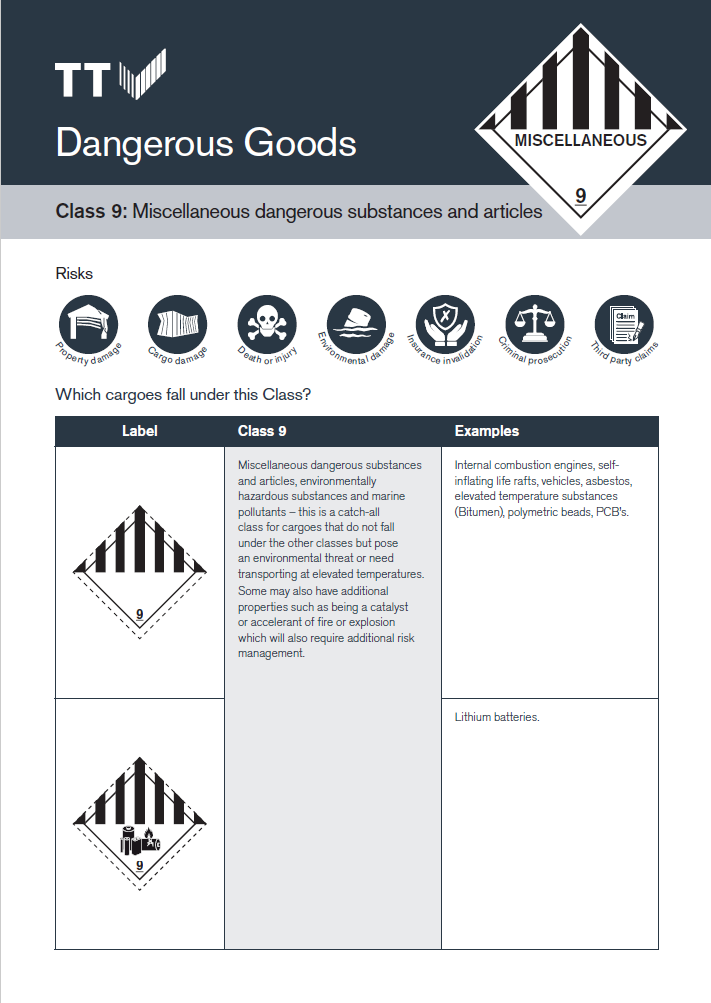
Class 9 is a catch-all category for dangerous goods that do not fit into other classes but still pose significant risks, including environmental hazards, marine pollutants, or substances requiring elevated temperature transport. Some may act as catalysts or accelerants for fire or explosion, requiring additional risk management.
Examples:
- Internal combustion engines
- Self-inflating life rafts
- Vehicles
- Asbestos
- Elevated temperature substances (e.g., Bitumen)
- Polymeric beads
- PCBs
- Lithium batteries
Key Handling Guidelines:
- Packing: Use only approved packaging; select packaging carefully due to the wide variety of substances; avoid damaged containers.
- Storing: Store in well-ventilated, temperature-controlled areas; away from ignition sources, heat, and incompatible cargo; inspect regularly; train staff in emergency response; alert DG competent person if issues arise.
- Transporting: Keep risk assessments updated; secure cargo; comply with CTU Code; never allow ignition sources near cargo that could accelerate fire or explosion; remove lithium batteries showing blistering, bulging, or heat to quarantine for checks.
Handling:
Never expose cargo to extreme temperatures; never throw, drop, or drag cargo; maintain emergency response plans; communicate clearly across the supply chain.
Documents
TT_DG_Docs_CLASS_09.pdf (304 kB) 30/11/2025
Dangerous Goods - Class 6 (267 kB) 30/11/2025
- Date
- 11/12/2025