
Dangerous goods quick reference guides - Class 3: Flammable liquids
Overview:
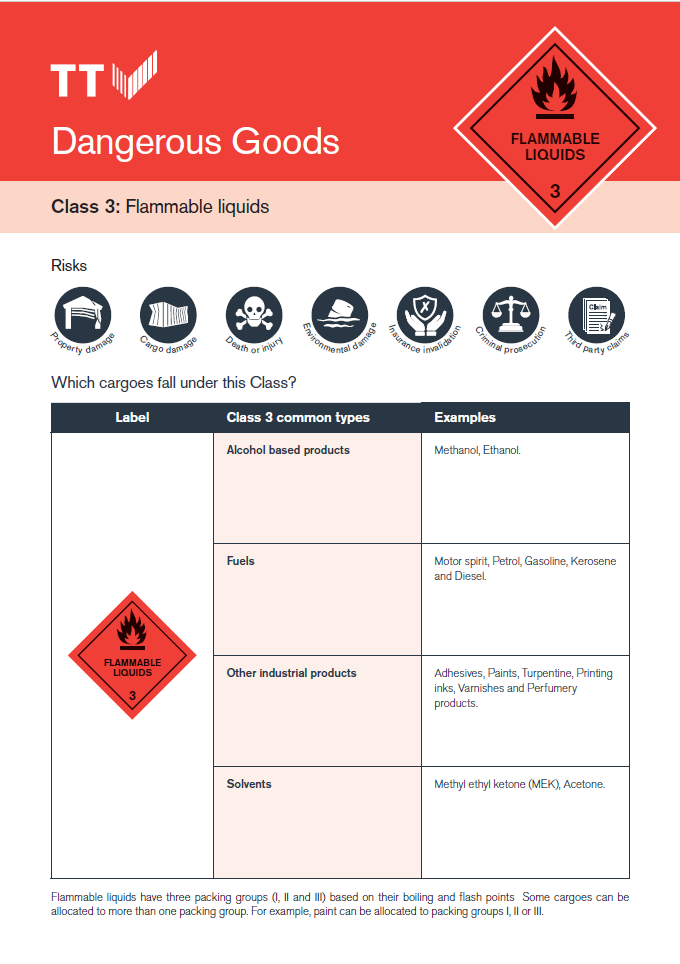
Class 3 dangerous goods include flammable liquids that pose risks such as property damage, cargo damage, injury, environmental harm, insurance invalidation, and potential criminal prosecution.
Common Types & Examples:
Alcohol-based products: Methanol, Ethanol.
Fuels: Petrol, Gasoline, Kerosene, Diesel.
Industrial products: Adhesives, Paints, Turpentine, Printing inks, Varnishes, Perfumery products.
Solvents: Methyl ethyl ketone (MEK), Acetone.
Flammable liquids are grouped into Packing Groups I, II, III based on boiling and flash points. Some cargoes (e.g., paint) can fall into multiple groups.
Key Handling Guidelines:
- Packing: Use only approved tanks/packaging; avoid damaged or contaminated containers; never overfill; keep spill management equipment nearby; control ignition sources.
- Storing: Store in well-ventilated, temperature-controlled areas; away from heat and ignition sources; close to ground; inspect regularly; train staff in emergency response; alert DG competent person if issues arise.
- Transporting: Segregate from other cargoes; follow manufacturer’s instructions; secure containers; comply with CTU Code; avoid ignition sources; obtain permissions for public/built-up areas.
Handling:
Never expose to extreme temperatures; never throw, drop, or drag cargo; maintain emergency response plans; communicate clearly across the supply chain.
Documents
Dangerous Goods - Class 3 (236 kB) 29/12/2025
- Date
- 11/12/2025