
Dangerous goods quick reference guides - Class 6: Toxic substances and infectious substances
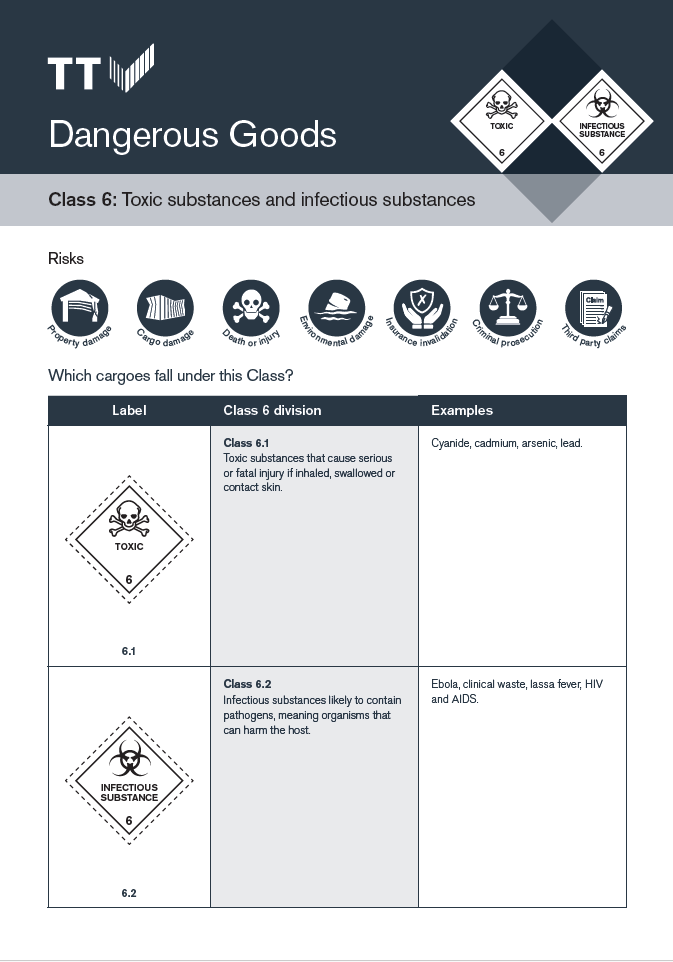
Class 6 dangerous goods include substances that are toxic or infectious, posing severe risks such as property damage, cargo damage, injury, environmental harm, insurance invalidation, and potential criminal prosecution.
Classification & Examples:
6.1 Toxic Substances: Cause serious or fatal injury if inhaled, swallowed, or in contact with skin.
Examples: Cyanide, cadmium, arsenic, lead.
6.2 Infectious Substances: Contain pathogens that can harm the host.
Examples: Ebola, clinical waste, Lassa fever, HIV/AIDS.
Key Handling Guidelines:
- Packing: Use only approved packaging; secure cargo to prevent movement; never repackage without expert advice; avoid damaged containers.
- Storing: Use secure facilities; keep away from heat, ignition sources, and incompatible cargo; inspect regularly; train staff in emergency response; alert DG competent person if issues arise.
- Transporting: Ensure proper segregation; avoid ignition sources for cargo with subsidiary flammable hazards; comply with CTU Code; obtain permissions for public/built-up areas; secure cargo during transport.
Handling:
Never expose to extreme temperatures; never throw, drop, or drag cargo; maintain emergency response plans; communicate clearly across the supply chain.
Documents
Dangerous Goods - Class 6 (267 kB) 30/11/2025
- Date
- 11/12/2025