
Ports, terminals, and warehouses rely on a wide range of equipment to handle cargo safely and efficiently. From cranes and forklifts to conveyor systems and automated storage, facility equipment must be properly managed to avoid accidents and delays.
TT Club offers practical advice on facility equipment use, maintenance, and risk mitigation. This section highlights best practices for operational safety, equipment selection, and staff training within cargo handling environments.
Get in touch
If you would like more information on any of these topics, submit an enquiry to our Loss Prevention team.
Latest publications
Latest resources

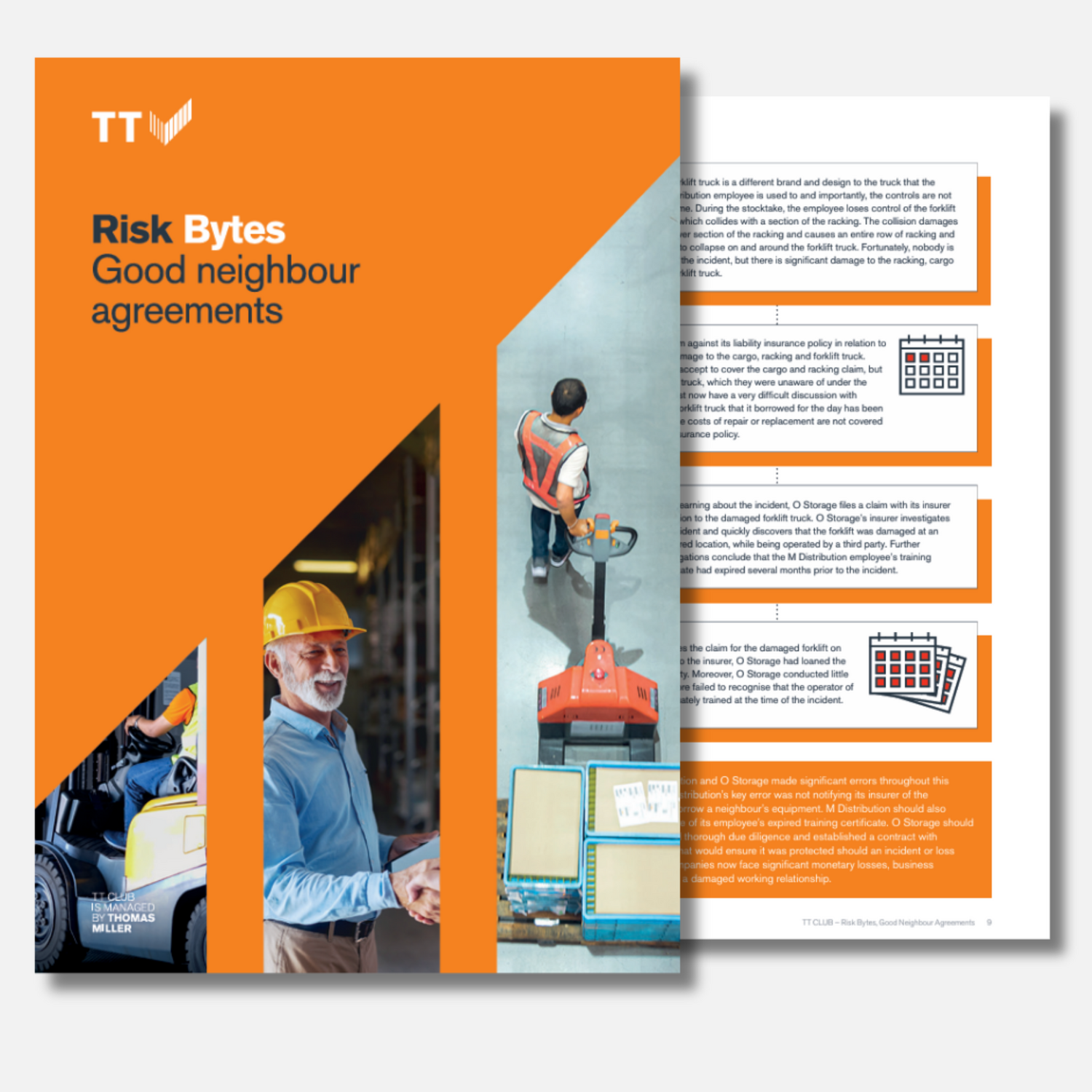
Risk Bytes | Good neighbour agreements
This Risk Byte provides a snapshot of the risks associated with 'good neighbour' agreements and why you and the neighbour you share resources with must have adequate insurance in place.
What are good neighbour agreements and why do they exist?
A good neighbour agreement describes the situation where operators with a close working relationship arrange to borrow or lend equipment, vehicles and staff for a certain period. These agreements are beneficial for the borrower and the lender. They are usually reciprocal agreements with both parties having something the other may need.
While good neighbour agreements can be beneficial, due to their casual nature it is important for both borrowers and lenders to be aware of the potential risks and be clear about where liabilities and responsibilities rest. This document outlines the potential risks of entering into these agreements without robust insurance in place, and the steps you can take to avoid them.