
Guidance note: Middle East developments - guidance for container operator Members
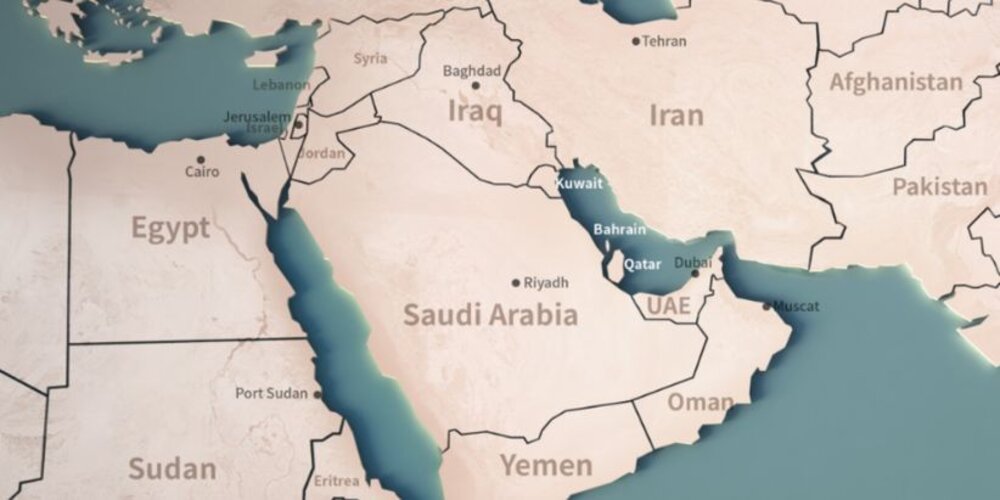
Armed conflict and political instability present complex and rapidly evolving risks for Members who operate containers as owners or lessees. Unlike self propelled Cargo Transport Units, freight containers are frequently static for extended periods, widely dispersed across multiple locations, and embedded within interconnected port, rail, and inland logistics networks that may deteriorate quickly under stress. Containers may be positioned in terminals, depots, rail yards, or border areas where access is dependent on third party operators, local authorities, and infrastructure that can be disrupted with little or no notice.
As hostilities escalate, Members may face restricted access, loss of operational control or abandonment of cargo, often compounded by curfews, border closures, port shutdowns, labour shortages, dispute over war-related surcharges or damage to transport infrastructure. Recovery, inspection, or repositioning may become impractical or impossible, particularly once security conditions deteriorate or commercial services are suspended. In such environments, even well documented assets can become difficult to trace, safeguard, or retrieve.
This advisory note outlines practical, preventative risk management considerations intended to help container operator Members assess and mitigate exposure when their containers are located in, or moving through, conflict affected region. The focus is on early visibility, dispersion, documentation, secure storage, and decision making before conditions deteriorate further, recognising that options narrow significantly once conflict intensifies and that proactive measures are often more effective than post loss recovery.
The dry commercial issues addressed in this note must of course be accepted in their necessary context, alongside the terrible human situation being faced in Iran, Israel and the Gulf states, and even beyond.
Maintain Full Visibility of Container Locations
The foundation of effective risk management in conflict affected environments is accurate, real time visibility of containers. We recommend that Members should maintain a continuously updated, centralised inventory of all the containers in the affected regions, clearly identifying their precise location—whether at ports, terminals, rail yards, inland depots, or other storage facilities—together with each container’s operational status (empty or loaded), cargo details where applicable, and the relevant ownership or lease position. In volatile situations, outdated or fragmented information can materially delay decision making and restrict the ability to take protective action.
Real time visibility is particularly critical because conflict conditions can change rapidly, often with little warning. Access to terminals may be curtailed, transport corridors disrupted, or third party operators withdrawn, leaving containers immobilised or effectively unmonitored. Without reliable location and status data, containers may become difficult to trace, relocate, or secure, increasing the risk of damage, seizure, abandonment, or prolonged loss of control. Accurate records also support communication with terminal operators, transport & logistics providers, insurers, and authorities, and form an essential foundation for any recovery, mitigation, or claims process.
Special attention should be given to containers located in ports, rail yards, airports, and border zones, as these locations are typically the most exposed during periods of escalation. Such areas are often subject to congestion, heightened security restrictions, labour disruptions, or direct physical impact. Enhanced monitoring of containers in these high risk locations enables earlier intervention—such as relocation, consolidation into secure facilities, or accelerated discharge—before conditions deteriorate further and available options narrow.
Reduce Concentration Risk
Large concentrations of containers in a single location can materially increase exposure to physical damage, seizure, prolonged access denial, or total loss, particularly during periods of armed conflict or political instability. When containers are amassed at major ports, rail terminals, or other strategic infrastructure, a single disruptive event—such as port closure, infrastructure damage, security lockdowns, or the withdrawal of operators—can affect a significant portion of a fleet simultaneously, amplifying the scale and severity of potential losses.
Where operationally feasible, Members should avoid prolonged accumulation of containers at major ports or other high profile, strategically sensitive locations. Consideration should be given to redistributing containers across inland depots, private yards, or lower profile facilities, where dependency on critical infrastructure and third party operators may be reduced.
While dispersion does not eliminate risk, it can play an important role in limiting concentration exposure and reducing the impact of any single loss event. By spreading containers across multiple locations, Members may preserve greater flexibility to reposition assets, maintain partial operational continuity, and mitigate the financial and operational consequences of sudden disruption in any one area.
Members are reminded that War Risks on Land are typically excluded from cover in listed area (See Listed Area | War risk exclusions - TT Club)
Differentiate Between Empty and Loaded Containers
Empty and loaded containers present very different risk profiles.
Empty containers
• Are easier and cheaper to relocate
• Should be moved early to safer regions where possible
• Should be stacked in secure, controlled yards
Loaded containers
• Require prioritisation based on cargo value and sensitivity
• May warrant early delivery, rerouting, or secure inland storage
• Should not be left idle at ports once instability increases
Early decision making is critical, as options diminish rapidly once transport corridors are disrupted.
Protect Documentation and Proof of Ownership
In conflict situations, documentation can be as important as physical security, particularly where access to containers is disrupted or control over locations is lost. Members should ensure that container identification details, ownership and lease records, and cargo manifests where applicable are complete, accurate, and kept up to date. In unstable environments, deficiencies in documentation can materially hinder the ability to assert rights over containers.
Given the heightened likelihood that containers may become inaccessible, handled by multiple third parties, or relocated without oversight, clear and readily available records are essential for engagement with operators, insurers, and relevant authorities, and for supporting insurance notifications and loss mitigation actions. Digital records should be securely backed up outside the affected region, with physical copies retained where practicable, as clear proof of ownership and contractual rights is often critical to recovery, restitution, or compensation in post conflict environments.
Review Container Lease Agreements and Force Majeure Clauses
In conflict affected environments, container lessees and lessors should carefully review their container lease agreements to assess the potential impact of force majeure or similar contractual provisions. Armed conflict and war may constitute force majeure events, triggering specific rights, obligations, or relief mechanisms for one or both contracting parties, depending on the wording of the agreement and governing law.
Particular attention should be given to notice requirements, mitigation obligations, and the allocation of risk for loss or damage arising during force majeure events, as failure to comply with contractual notice or documentation requirements may prejudice contractual rights or available remedies.
A clear understanding of contractual exposure is therefore an important complement to operational and insurance risk management measures.
Liability for General Average Contribution
General Average (GA) is founded on the principle that where extraordinary measures are taken to preserve the collective interests involved in the voyage—such as the sacrifice of property or the incurrence of exceptional costs—the parties whose property completes the voyage safely are required to contribute proportionately to the resulting loss or expense.
Where a vessel carrying Members’ containers is affected by a war related incident, Members with owned or leased containers on board may be required by the GA adjuster to provide GA guarantee as a condition for the release of Members’ containers. While the vessel’s war risk insurances should respond to GA costs, the shipowner may nevertheless elect to declare GA in the first instance, triggering security requirements from cargo and container interests among others.
Members are therefore advised to notify their broker or usual TT Club contact promptly upon becoming aware of a General Average incident, so that the Club may provide appropriate guidance and support in accordance with the applicable policy terms and conditions.
Review Insurance and War Risk Exposure
Standard container risk insurance policies typically exclude war risks. Members are therefore encouraged to speak with their insurance broker or usual TT Club contact to confirm the scope of their policy coverage.
Where a vessel carrying insured containers is affected by the current situation while operating in the specified geographical limits— (see TT Club War Risk Exclusions Circular for more detail about the geographical limits) —and insured containers are impacted, the availability of cover will depend on whether Marine War Risks for the relevant areas have been reinstated.
Members are advised to consult the Club’s dedicated Middle East conflict webpage, which provides the latest guidance, frequently asked questions, and relevant war risk circulars.
Key Points for Consideration
- Maintain accurate, real time visibility of container locations, status, and ownership or lease position, with particular focus on containers in high risk or strategically sensitive locations.
- Reduce concentration risk where operationally feasible by avoiding prolonged accumulation of containers at major ports, terminals, or other critical infrastructure.
- Take early, proactive decisions on relocation, secure storage, or alternative routing, recognising that options may diminish rapidly as conflict escalates.
- Review insurance arrangements carefully to understand the scope and limitations of war risk cover.
- Examine container lease agreements and contractual terms to assess exposure to force majeure, rights, obligations, and allocation of war related costs.
- Preserve complete and accessible documentation, including container identification, contracts, and records, with secure backups held outside affected regions.
- Engage early with brokers, insurers, and contractual counterparties when risks emerge, disputes arise, or incidents occur.
The Club will continue to monitor developments closely and will issue further guidance should the situation materially change. Our thoughts are with all affected by these events.
- Date
- 30/04/2026

09/10/2026
Ozan Durak named YLP Global Winner at 2026 FIATA World Congress
FIATA, the International Federation of Freight Forwarders Associations, in partnership with TT Club, is pleased to announce the 2026 Global Winner of the FIATA Young Logistics Professionals (YLP) Award, presented during the 2026 FIATA World Congress in Milan, Italy, during the 100th years of FIATA.